Accessible Condo Renovations Surrey, White Rock & Langley
Planning an accessible condo renovation in Surrey, White Rock or Langley? We cover strata approval, costs, universal design features, and BC permit requirements.
Accessible Condominium Renovations in Surrey, White Rock and Langley - A Complete Guide for 2026
⏱ Estimated Reading Time: 8–9 minutes
Condominiums and townhouses are increasingly the home of choice for Surrey, White Rock and Langley homeowners who want to simplify their lives, reduce maintenance responsibilities, and stay close to the community they know. For many residents - retirees, downsizers, multi-generational families, and people with permanent disabilities or mobility impairments alike - a condo is not a stepping stone. It's where they plan to stay for the long term.
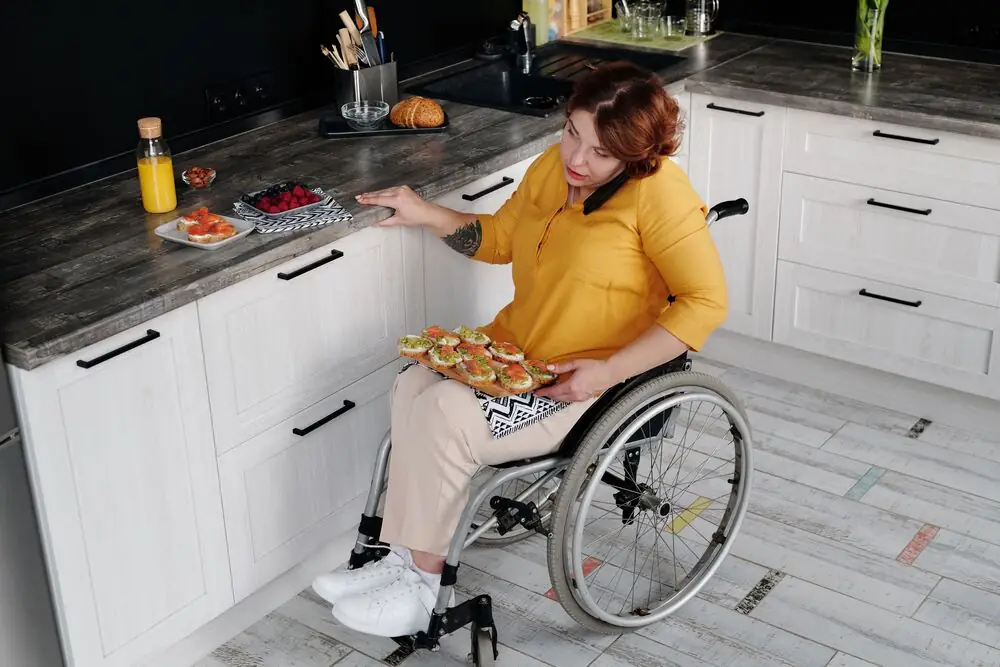
And for wheelchair users specifically, a condo can be the ideal living arrangement - single-level, no exterior maintenance, often closer to amenities and transit. The challenge is that most condos were not designed with full wheelchair accessibility in mind. A well-planned accessible condo renovation changes that fundamentally - creating a unit where someone using a wheelchair can move freely, use the kitchen and bathroom independently, and live without the daily friction of a space that wasn't built for them.
That makes accessibility planning in a condo renovation particularly meaningful. A well-designed accessible condo renovation removes the barriers that otherwise force people to move when their needs change. It keeps you in your home, in your community, on your terms.
The challenge is that condo accessibility renovations have a layer of complexity that detached homes don't - strata approval. This guide covers what Surrey, White Rock and Langley condo owners need to know to plan a successful accessible renovation: the features that make the biggest difference, how strata approval works, what permits are required, and what it all costs.
The Unique Challenge of Accessible Renovations in Strata Buildings
In a detached home, an accessible renovation is largely between you and the building permit office. In a strata condominium or townhouse in Surrey or White Rock, you have an additional stakeholder: the strata corporation. Under BC's Strata Property Act, strata corporations govern what owners can do within their units and must approve significant renovations before work begins.
The good news is that strata corporations in BC are bound by the BC Human Rights Code, which prohibits discrimination on the basis of disability and creates a duty to reasonably accommodate an owner's accessibility needs. While a strata governs alterations to units and common property under the Strata Property Act, it generally cannot unreasonably refuse a properly submitted accessibility modification that an owner genuinely requires. If an owner believes a request has been unreasonably denied, the BC Human Rights Tribunal and the Civil Resolution Tribunal provide avenues for resolution.
The practical process is the same as any strata renovation request - you submit a written request with the scope of work, your contractor's credentials, proof of general liability insurance, and a WorkSafeBC clearance letter. For accessibility-specific modifications, include a clear explanation of the accessibility need being addressed. This context helps strata councils understand the request and process it appropriately.
Get a copy of your building's bylaws from your strata manager before planning. Some specific accessibility features - like grab bar installation in a bathroom that shares a wall with a neighbour - may need to be reviewed for any structural implications. A contractor experienced in accessible strata renovations in Surrey, White Rock and Langley knows how to prepare a submission package that addresses these points clearly.
The Most Important Accessible Features in a Condo Renovation
Bathroom - The Highest Priority
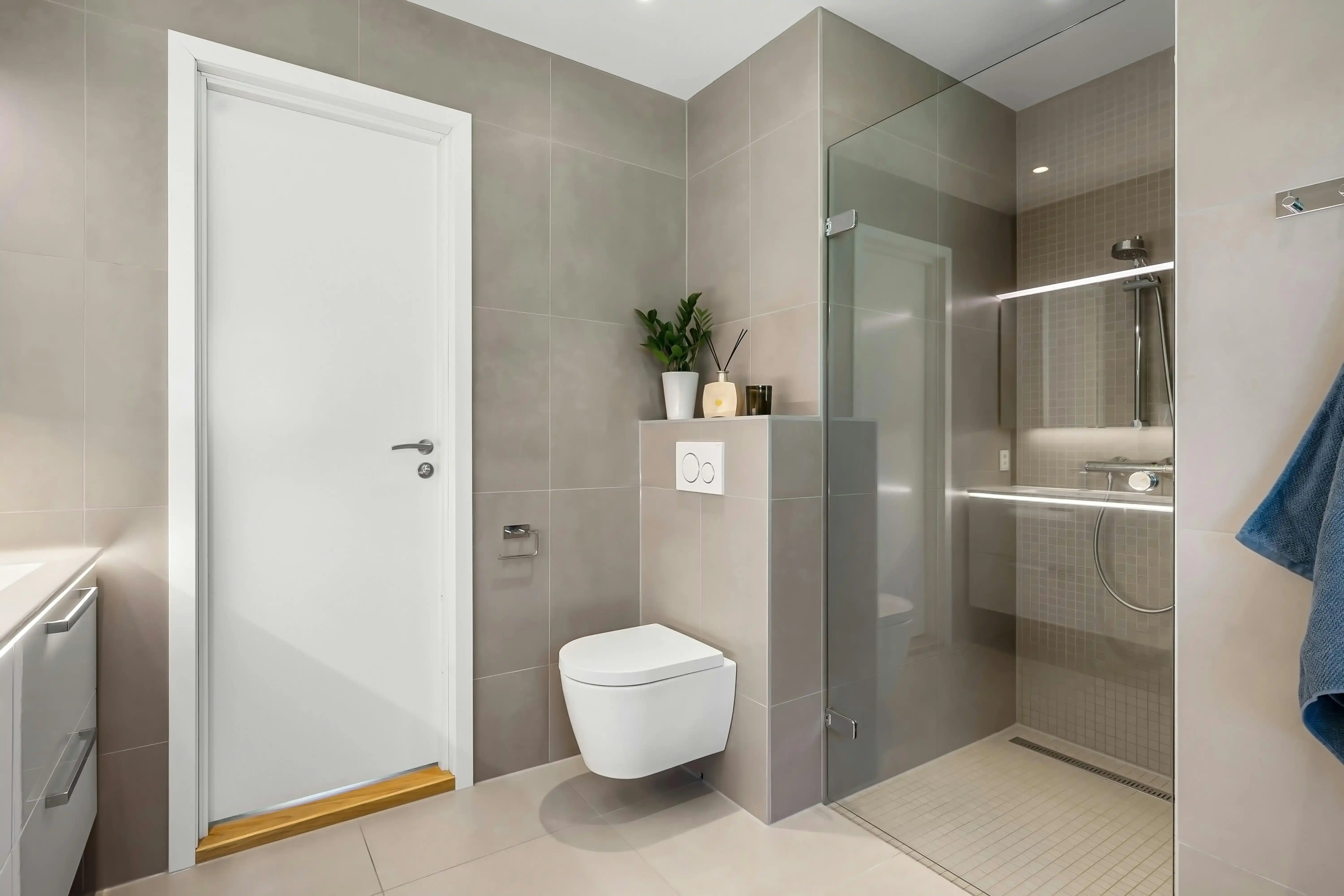
The bathroom is where the most meaningful accessible improvements happen in any condo renovation. The features that deliver the most impact are the same as in a detached home - curbless showers, grab bars, comfort-height toilets, lever tapware, and non-slip flooring - but in a condo context, the strata and structural constraints shape what's possible.
Curbless showers require the shower floor to sit flush with the bathroom floor, which means modifying the subfloor beneath the shower. For wheelchair users, a roll-in shower of at least 36 by 36 inches allows basic access, though 36 by 60 inches is strongly preferred for comfortable manoeuvring. These figures follow recognized barrier-free design standards rather than a residential code mandate, so a contractor experienced in accessible design can confirm the right dimensions for your specific unit. A wall-hung vanity with knee clearance below allows a wheelchair user to pull right up to the sink. A doorway of at least 36 inches is needed for wheelchair access - 42 inches is better. These dimensions should be confirmed against the condo's actual floor plan before renovation planning begins.
In a concrete highrise building in lower White Rock, accessing and modifying the concrete structural slab is more constrained than in a wood-frame townhouse. Your contractor needs to assess the specific building's structural type before confirming what's feasible.
In wood-frame townhouse complexes - common throughout Surrey, White Rock and Langley's newer suburban strata developments - curbless shower installation is typically as straightforward as in a detached home. The subfloor can be recessed within the shower footprint to achieve the correct height relationship, and the shower can be waterproofed and tiled continuously with the bathroom floor.
Grab bar installation in a condo bathroom requires confirming that solid blocking exists in the walls - either pre-existing from the original construction, or added during a renovation. Under adaptable dwelling unit provisions introduced in the 2024 BC Building Code (in effect for projects permitted from March 2025 onward), a share of units in new residential buildings must include reinforced bathroom walls for future grab bar installation. Older units generally will not have this blocking, so your contractor checks for existing backing and adds it where needed as part of the renovation scope. For a full guide to accessible bathroom features and costs, accessible bathroom renovations in Surrey and White Rock covers the complete breakdown.
A fully accessible condo bathroom renovation typically runs $28,000 to $45,000 CAD in Surrey and White Rock - the same range as a full bathroom renovation, because accessible features are incorporated into the scope rather than added as a separate premium.
Kitchen - Making It Work for Everyone
An accessible condo kitchen focuses on the same principles as an accessible kitchen in any home - pull-out storage that brings everything to you, lever tapware, appropriate counter heights, and good lighting. The strata constraint in a condo kitchen is primarily around plumbing. Many older condo buildings have shared plumbing stacks that limit how much drain lines can be relocated without affecting neighbouring units.
In most condo kitchen accessibility renovations, the focus is on cabinetry, hardware, and layout optimisation rather than structural plumbing changes - and this is where most of the practical improvement lives anyway. Pull-out lower cabinet shelves, deep pot drawers, lever tapware at the sink, pull-down upper shelf systems, and under-cabinet lighting collectively transform a kitchen's usability without requiring plumbing changes that would trigger strata concerns.
A Tier 1 accessible condo kitchen renovation with focus on accessible cabinetry and fixtures - without structural changes - typically runs $30,000 to $60,000 CAD. A full condo kitchen renovation with accessible design throughout runs $60,000 to $95,000 CAD. For a full guide to accessible kitchen features, accessible kitchen renovations in Surrey and White Rock covers everything.
Doorways and Circulation
Standard interior doorways in older condos are often 28 to 30 inches wide. Walker clearance needs 32 inches. Wheelchair clearance needs 36 inches. Widening doorways is feasible in most wood-frame condo buildings and requires a building permit. In concrete highrise buildings, the door frame structure may be more constrained - your contractor assesses what's possible in your specific unit.
For condo units where full doorway widening isn't feasible, offset door hinges (also called swing-clear hinges) add approximately 2 inches of clear width to an existing doorway without any structural modification. It's not as effective as a proper doorway widening, but it's a useful interim measure at very low cost.
Clear turning radius in bathrooms and kitchens - approximately 60 inches of clear floor space for wheelchair manoeuvrability - is the specification to aim for in any accessible condo renovation. In compact condo layouts, this sometimes requires choosing furniture and fixture sizes carefully to preserve floor space rather than structural modifications.
Flooring Throughout the Unit
Accessible flooring for a condo means smooth, firm, low-maintenance surfaces that allow easy movement for wheelchairs, walkers, and canes without trip hazards. Luxury vinyl plank is the most popular choice in Surrey and White Rock condo renovations for exactly these reasons - it's smooth, warm, durable, waterproof, and available in finishes that look genuinely premium.
The key strata consideration for flooring changes in a condo is acoustic performance. Most Surrey and White Rock strata buildings require hard surface flooring to be installed over an acoustic underlayment that meets the building's sound transmission requirements. Confirm your building's specific underlayment specification with your strata manager before ordering flooring. A contractor experienced in Surrey and White Rock strata renovations will know to ask for this specification upfront.
Transition strips between different flooring areas should be flush-mounted or ramped transitions rather than raised ridges, which are trip hazards. This is a small detail that costs nothing extra when specified from the start and matters significantly for users with walkers or wheelchairs.
BC Building Code and Adaptable Units
Under the 2024 BC Building Code, which took effect for adaptable dwelling provisions on March 10, 2025, a portion of units in new residential buildings must be built as adaptable units, designed so that accessibility features can be added later with minimal renovation. These provisions require reinforced bathroom walls for future grab bars, manoeuvring space in bedrooms, bathrooms, and kitchens, and controls at accessible heights. The requirement currently applies to roughly one in five units in larger residential buildings, with smaller homes such as townhouses required to include grab bar wall reinforcement.
If you live in a condo or townhouse permitted under these newer rules, your unit may already have some of this blocking in place. Check with your building management or the original building documentation. Existing blocking makes accessible renovation significantly simpler and less expensive, grab bars can be installed directly without opening walls. Note that homes built before these provisions took effect generally will not have this reinforcement, so it would need to be added as part of the renovation.
BC Grants and Tax Credits for Accessible Condo Renovations
The federal Home Accessibility Tax Credit allows eligible homeowners to claim up to $20,000 in qualifying accessible renovation expenses per year, generating up to $3,000 in federal tax relief. This applies to condo owners making accessibility modifications to their own unit. Eligible expenses include grab bar installation, doorway widening, curbless shower construction, accessible cabinetry modifications, and other qualifying improvements.
For condo owners with disabilities seeking accessibility modifications that the strata council has approved, additional support may be available through provincial disability assistance programmes. Confirm current programme details and eligibility with your contractor or a financial advisor.
Permit Requirements for Accessible Condo Renovations in Surrey and White Rock
Strata approval and municipal permits are both required for accessible condo renovations that involve structural changes, plumbing, or electrical work. Strata approval comes first - get it before scheduling permits or trades.
In Surrey, building permits are obtained through the MySurrey online portal. In White Rock, through the City of White Rock Building and Licensing Department. In Langley, through either the Township of Langley Development Services Department or the City of Langley Community Development Department depending on which municipality your property is in. Your contractor handles both applications simultaneously to minimise the overall approval timeline.
Like-for-like accessible upgrades - installing grab bars in existing blocking, replacing taps with lever styles, replacing a toilet with a comfort-height model - typically don't require permits and may be submitted to the strata under a simplified notification process rather than a full approval request. Confirm your building's specific requirements with your strata manager.
Choosing the Right Contractor for an Accessible Condo Renovation
Accessible condo renovations benefit from a contractor who has experience in three specific areas: accessible design and feature specification, strata renovation protocol in Surrey, White Rock and Langley buildings, and the specific structural constraints of the building type (wood-frame versus concrete highrise).
Ask directly: have you completed accessible condo renovations in Surrey and White Rock? Can you prepare the strata approval submission package including the accessibility context? Do you know how to assess what structural modifications are feasible in my specific building type?
For a full guide to evaluating renovation contractors, questions to ask a contractor before hiring them in Surrey and White Rock gives you a complete checklist that applies directly to accessible condo renovations.
Final Thoughts
An accessible condo renovation in Surrey, White Rock or Langley is an investment in staying where you want to be - in your home, in your community, for as long as you choose. The features that make the biggest difference are almost always the ones that get incorporated during a renovation that's already planned, at a fraction of what they'd cost to retrofit later. The strata process adds a step but not an insurmountable barrier - particularly for accessibility modifications where BC law requires reasonable accommodation.


