Basement Home Gym Ideas Surrey, White Rock & Langley 2026
Planning a basement home gym in Surrey, White Rock or Langley? We cover flooring, soundproofing, electrical, layout ideas, and costs in CAD for BC homes.
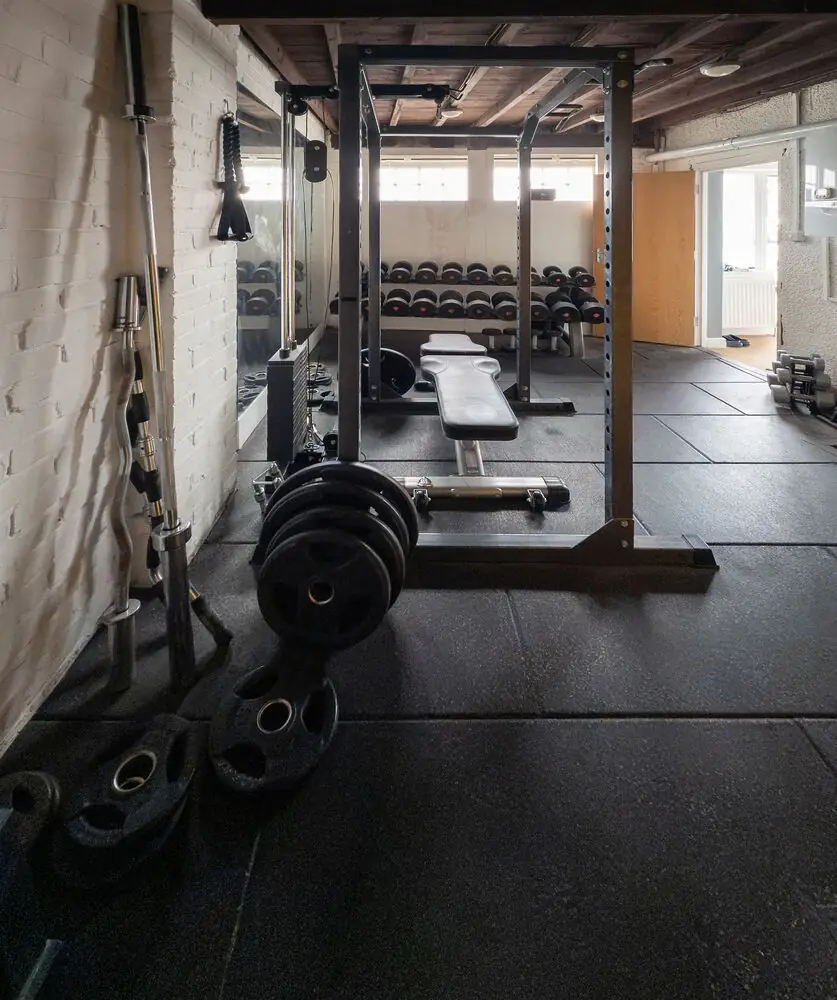
Basement Home Gym Ideas for Surrey, White Rock and Langley Homes in 2026
⏱ Estimated Reading Time: 8–9 minutes
The basement home gym has become one of the most consistent renovation requests in Surrey, White Rock and Langley in 2026 - and the reasons are practical rather than aspirational. Commercial gym memberships in the Lower Mainland run $640 to $1,920 CAD per year per person. Commute time to and from a gym is time that most busy households genuinely don't have. And for households where early morning or late evening training is the only time that works, a gym that's 15 seconds from your bedroom removes every barrier to actually using it.
Done well, a basement home gym in Surrey or Langley doesn't look like a gym. It looks like a purposefully designed space that happens to have equipment in it. Here's how to make it work properly.
Before You Plan the Equipment - Plan the Space
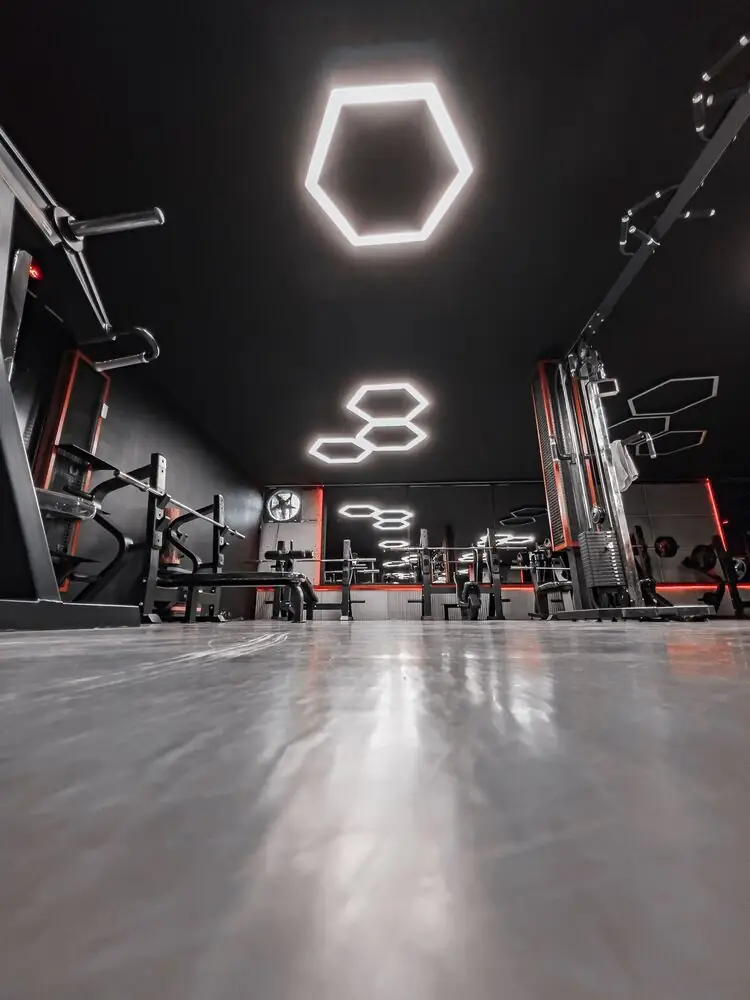
The single most common basement home gym mistake is buying equipment first and designing the space around it. The result is usually a gym that technically contains the equipment but doesn't function as well as it should - awkward traffic flow between stations, insufficient ceiling height for overhead exercises, equipment positioned without regard for mirrors or lighting.
Plan the space first. The questions to answer before any equipment is considered:
What is the ceiling height?
BC Building Code requires a minimum of 1.95 metres (6 feet 5 inches) for habitable basement space. This is the absolute minimum - not the comfortable minimum. For a home gym where overhead press, pull-ups, jumping exercises, or tall equipment like a cable machine is planned, 2.2 to 2.5 metres of clear ceiling height is the functional requirement. Measure the actual clearance at the lowest point, accounting for any bulkheads, ductwork, or beams. If ceiling height is genuinely tight, select equipment that works within the constraint rather than fighting it.
Where is the mechanical equipment?
Most Surrey, White Rock and Langley basements have their furnace, hot water tank, and electrical panel in a defined mechanical room or area. Confirm the gym's footprint doesn't require moving any mechanical systems, and ensure adequate clearance around the panel and appliances for servicing.
What's the floor plan?
Sketch the room dimensions and mark the location of windows, doors, support columns, and the mechanical area. This gives you the actual usable floor space to work with before you start placing equipment.
Flooring - The Foundation of a Functional Gym
Gym flooring is the most important finishing decision in a basement home gym, and it's genuinely different from other flooring in the house.
Rubber flooring tiles or rolls:
The professional standard for gym applications. Rubber provides impact absorption (important for dropped weights and high-impact exercises), slip resistance when wet with sweat, and acoustic dampening that reduces impact noise transmitted to the floors above. Interlocking rubber tiles in 3/4-inch thickness are the minimum for a free weights area. Areas where barbells are dropped require 1.5 to 2-inch thick rubber or a dedicated lifting platform with extra rubber below. Quality rubber gym flooring in Surrey, White Rock and Langley runs $16 to $35 per sq ft installed depending on thickness.
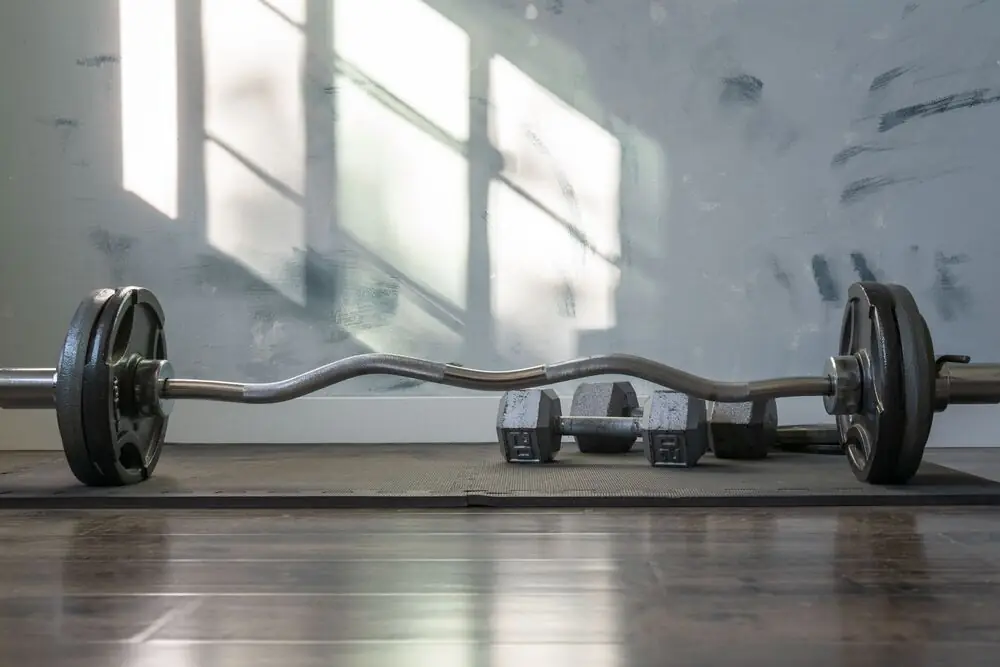
LVP flooring in secondary zones:
Not every part of a home gym needs to be rubber. For cardio equipment zones, yoga and stretching areas, or multi-use spaces where the gym shares the basement with other functions, LVP provides a finished residential appearance while still being durable and easy to clean. LVP and rubber can be combined in the same space - rubber in the free weights area, LVP in the cardio or stretching zone - with a clean transition between the two.
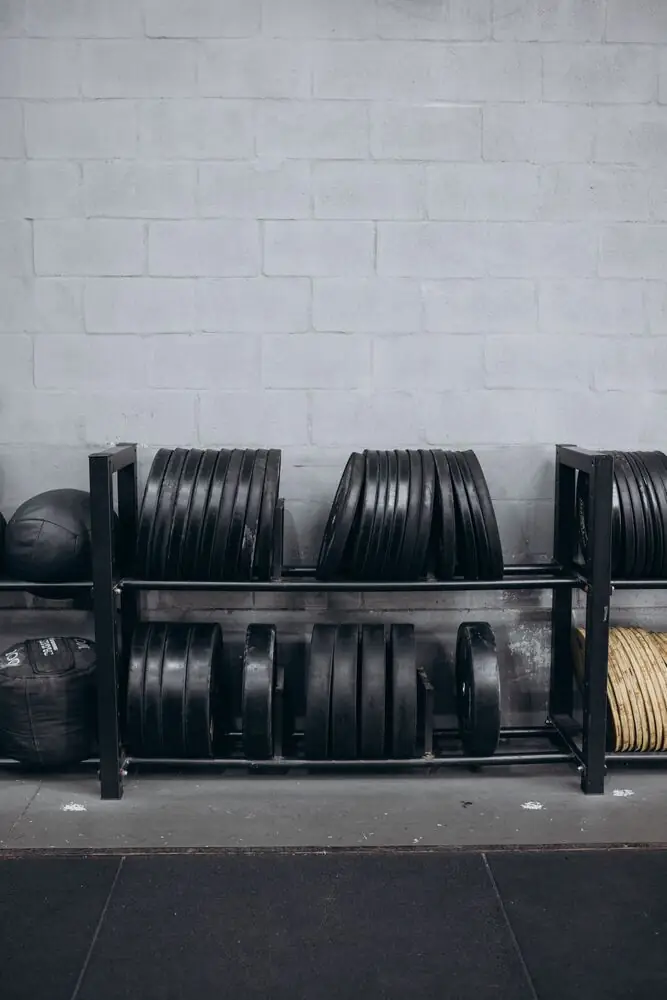
Concrete with sealant or epoxy:
Left as finished concrete with a quality sealant, the basement slab is the most affordable base for a home gym - it's hard, flat, cleanable, and durable. The limitation is that uncoated concrete has no cushioning, no acoustic dampening, and is cold underfoot. Adding rubber mats on top of sealed concrete is a practical and cost-effective approach for households where budget is the primary driver.
Soundproofing - The Consideration That Determines Liveability
This is the detail that separates a home gym that works for the whole household from one that creates daily conflict over when it can be used.
Weight training is loud. Barbells dropped on rubber flooring, treadmills running, music playing - all of this transmits through the floor structure to the living areas above. In a Surrey or Langley detached home where bedrooms sit above the basement gym, early morning or late evening training without soundproofing wakes up the household. In the same home with proper soundproofing, training at 5:30am is inaudible two floors up.
The most effective basement gym soundproofing combines:
Thick rubber flooring:
1.5 to 2-inch rubber in the free weights area dampens the impact of dropped weights significantly. This is the highest-impact single soundproofing investment for a gym.
Acoustic ceiling insulation:
Mineral wool (Rockwool) in the joist cavities above the gym space, combined with resilient channels and acoustic drywall on the ceiling, reduces airborne sound transmission significantly. This is the combination that handles music, verbal instruction, and equipment noise that rubber flooring alone doesn't address. Adding this during a basement renovation when the ceiling is already being worked on costs approximately $3,200 to $6,400 CAD for a standard gym area.
Equipment isolation pads:
Under treadmills, rowing machines, and other cardio equipment, dedicated vibration isolation pads reduce the transmission of machine vibration through the floor and into the structure. These are relatively inexpensive ($96 to $320 CAD per equipment piece) and provide meaningful additional noise reduction.
Electrical - What Most Gym Plans Miss
Cardio equipment requires dedicated electrical circuits. A treadmill typically requires a dedicated 20-amp 120V circuit. An elliptical or stationary bike typically requires a dedicated 15-amp circuit. Running multiple pieces of cardio equipment on a shared circuit with your gym lighting causes tripped breakers and potentially damages the equipment's motor over time.
For any basement home gym in Surrey, White Rock or Langley that will include powered cardio equipment, the electrical scope needs to be planned early - during the rough-in phase of the renovation when walls and ceilings are already open. Adding circuits after a finished basement is installed requires opening finished surfaces, which significantly increases the cost.
A licensed electrician handles the permit and installation. In Surrey, through the MySurrey portal. In White Rock, through the City of White Rock Building Department. In Township and City of Langley, through their respective building departments. Electrical permit fees for additional circuits typically run $150 to $400 CAD.
Also consider: multiple standard outlets positioned around the gym for fans, phone charging, and accessories. Good overhead lighting on a dimmer so the lighting level can be adjusted for different training modes. If you plan a sound system, a dedicated circuit for the amplifier prevents interference from other equipment.
Layout Ideas for Surrey and Langley Basement Gyms
The zoned approach:
Divide the basement gym into defined functional zones - a free weights zone with rubber flooring, racks, and a mirror wall; a cardio zone with LVP or rubber flooring for the equipment; a stretching or yoga zone with a softer surface. Each zone works efficiently without interfering with the others. This approach works well for larger basements in Walnut Grove, Brookswood, and South Surrey's detached homes where square footage allows genuine multi-zone design.
The multi-use basement:
For Surrey, White Rock and Langley households where the basement serves multiple functions - family room, home office, and gym - the gym functions best as a defined area with its own flooring character rather than scattered throughout the open basement. A half-wall, a glass panel, or simply the change in flooring from LVP to rubber creates a zone definition that makes the gym feel intentional without requiring walls.
The focused training space:
For households where the basement gym will be used primarily for one training style - strength training, functional fitness, yoga, or cycling - a focused single-purpose design with all elements optimised for that style often works better than trying to accommodate everything. A 200 sq ft power rack zone with proper rubber flooring, mirrors, and overhead lighting is more effective than a 300 sq ft space trying to be all things.
Mirror Walls - What They Actually Cost and Do
Mirror walls are the standard finishing element in home gyms - they're functional (form check during training) and visual (they make the space feel larger and more professional). Floor-to-ceiling mirrors on one or two walls of the gym transform the space dramatically.
In Surrey, White Rock and Langley's current market, a professionally installed mirror wall runs $32 to $64 per sq ft installed, depending on the size and configuration. For a standard 12 by 8-foot mirror wall (96 sq ft), expect $3,072 to $6,144 CAD. This is one of the finishing elements most worth including during the renovation when the contractor is already on site rather than adding after the fact.
Mirrors in a gym should be installed with proper anchoring appropriate for their size and weight. A gym mirror that comes off the wall during use is a serious safety issue - proper installation by a professional is non-negotiable.
What Does a Basement Home Gym Cost in Surrey, White Rock and Langley?
A basic gym conversion of an existing finished basement space - rubber flooring in the gym area, mirror wall, additional electrical circuits, and basic soundproofing - typically runs $16,000 to $32,000 CAD.
A full basement home gym renovation from an unfinished basement including framing, insulation, drywall, rubber flooring, mirror wall, proper electrical for cardio equipment, acoustic ceiling treatment, and lighting typically runs $45,000 to $80,000 CAD for a well-finished result in our current market. This range reflects the full basement finishing scope rather than just the gym-specific elements.
For context on how a basement gym renovation fits within the broader basement renovation scope and costs in our area, basement renovation cost in Surrey and White Rock - what homeowners can expect in 2026 covers the full cost picture.
Final Thoughts
A basement home gym in Surrey, White Rock or Langley is one of the most consistently used and genuinely valued home renovations available for fitness-oriented households. The planning decisions that matter most are ceiling height (measure before planning equipment), flooring (rubber for weights, match the surface to the training type), soundproofing (invest in the ceiling if there's bedroom space above), and electrical (plan circuits before closing walls). Equipment decisions come after the space is right - not before.


