Freestanding vs Built-In Tub: Surrey & White Rock Guide
Freestanding or built-in tub for your Surrey or White Rock bathroom? We compare cost, installation, space, maintenance, and which suits BC homes best.
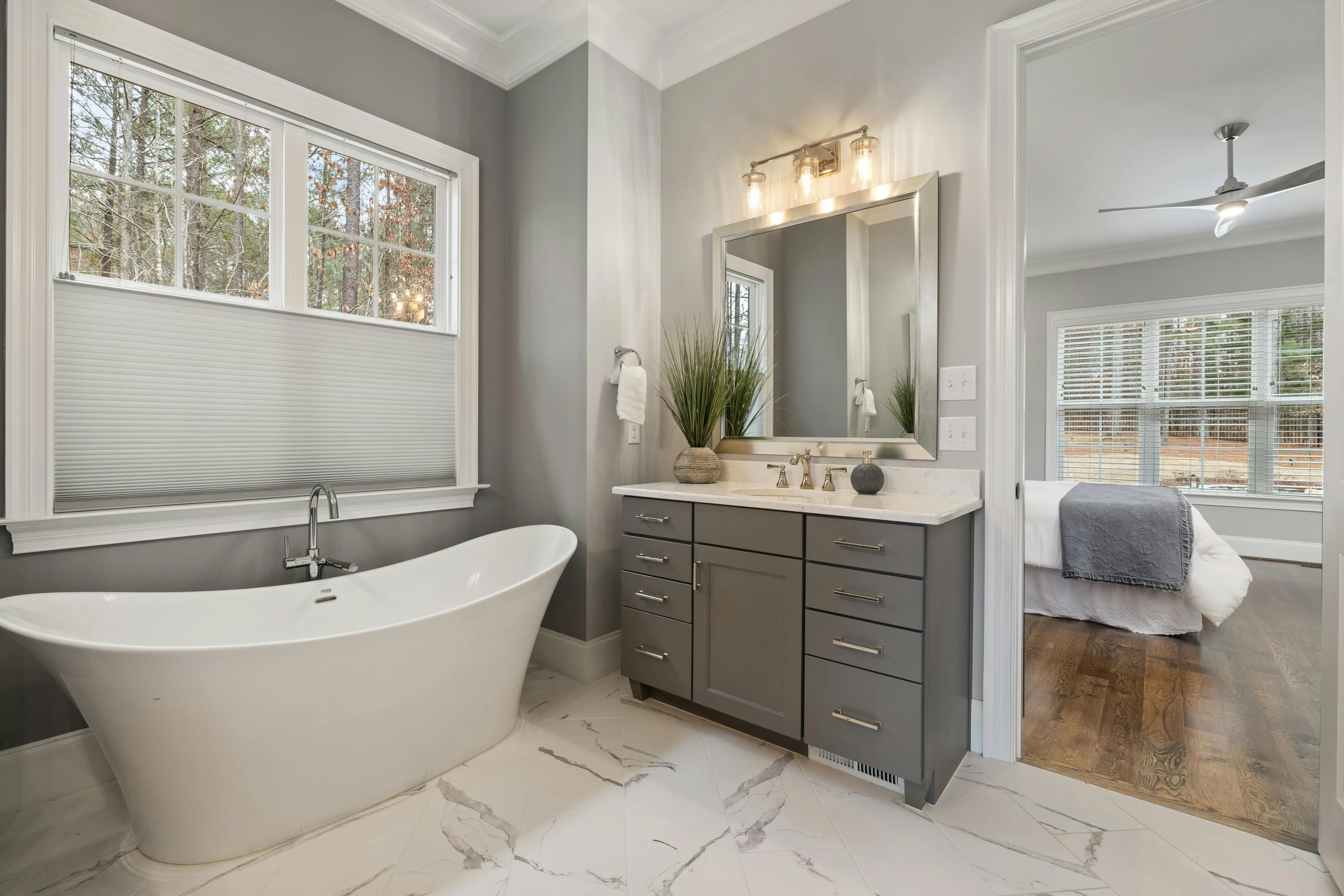
Freestanding Tub vs Built-In Tub - Which Is Right for Your Surrey or White Rock Bathroom?
⏱ Estimated Reading Time: 6–7 minutes
There is a reason the freestanding tub has become the defining image of the luxury bathroom in 2026. That sculptural, standalone silhouette - positioned in front of a window, or against a feature wall of large-format tile - appears in virtually every premium ensuite renovation photo across Surrey and White Rock. And it is genuinely beautiful.
But beautiful and practical are not always the same thing. The decision between a freestanding tub and a built-in tub is one of the more significant choices in any bathroom renovation, and it is worth making with a clear understanding of what each option actually involves - not just how it looks in photos. Here is the honest comparison Surrey and White Rock homeowners need before they decide.
What Is a Freestanding Tub?
A freestanding tub is a standalone bathtub - finished on all sides, not enclosed by walls or a surrounding deck. It sits in open floor space, typically on legs or a solid base, and is connected to plumbing lines that run through the floor beneath it rather than through walls. Freestanding tubs are available in a range of shapes - classic clawfoot, modern oval, rectangular slipper, and sculptural stone resin forms - and in a range of materials that significantly affect their cost, weight, and heat retention.
The visual appeal is real. A well-chosen freestanding tub in the right bathroom is a genuine focal point - a piece of design that changes how the entire room feels.
What Is a Built-In Tub?
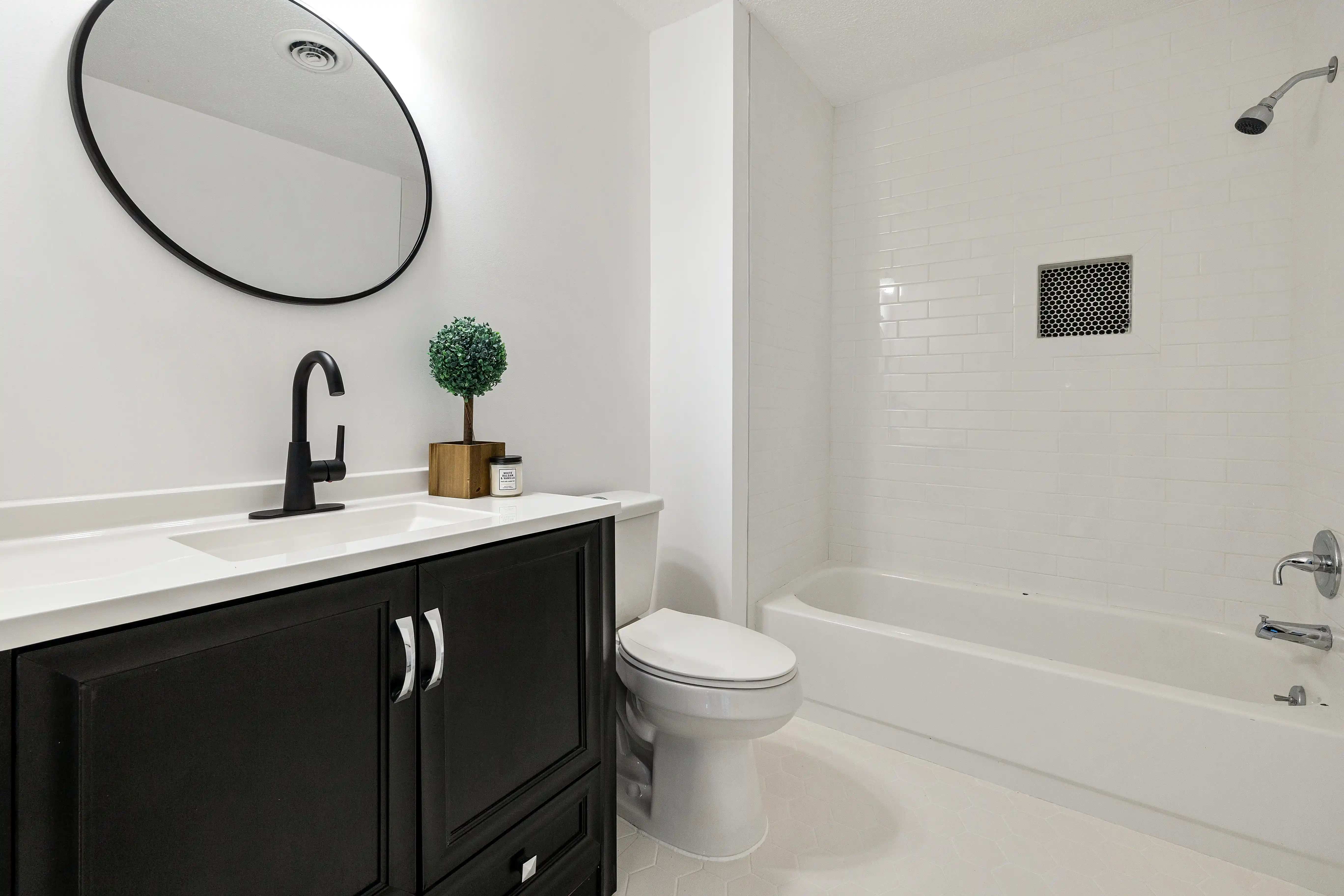
A built-in tub - also called an alcove tub or drop-in tub depending on the configuration - is installed within walls, a deck, or a surround. The most common form in Surrey and White Rock's housing stock is the alcove tub: a standard acrylic tub set into a three-wall enclosure, typically combined with a shower above. Drop-in tubs are installed into a built deck or platform, which can be finished in tile, stone, or wood to create a spa-like effect.
Built-in tubs are the more practical, space-efficient choice. They require less floor clearance, are easier to get in and out of for most users, typically offer more bathing depth for their footprint, and are significantly simpler to install.
The Cost Reality in Surrey and White Rock
This is where the two options diverge most dramatically - and where Surrey and White Rock homeowners most often get surprised.
A standard acrylic built-in alcove tub - the most common form - costs $800 to $2,500 CAD for the fixture, with installation labour at Lower Mainland trade rates adding $1,200 to $2,500 CAD. Total installed cost for a quality built-in alcove tub in Surrey or White Rock typically runs $2,000 to $5,000 CAD, not including the surrounding tile work and shower fixture if applicable.
A freestanding tub is a more significant investment at every level. Entry-level acrylic freestanding tubs start around $2,000 to $4,000 CAD. Cast iron options with better heat retention run $4,500 to $9,000 CAD. Stone resin or solid surface models - the ones that appear in premium renovation photos - typically run $7,000 to $16,000 CAD or more. All pricing before installation.
Installation of a freestanding tub is also more complex and more expensive than a built-in. Because plumbing runs through the floor rather than the wall, the subfloor needs to be opened to position the drain precisely before the tub is set. Floor-mounted faucets - required for most freestanding tub installations - are a separate cost, typically $800 to $2,500 CAD for quality options. For cast iron or stone resin tubs that can weigh 300 lbs or more when empty and significantly more when full, floor structural reinforcement may be needed, adding further cost.
Total installed cost for a quality freestanding tub in a Surrey or White Rock bathroom renovation realistically runs $6,500 to $22,000 CAD depending on the tub material, the plumbing scope, and whether floor reinforcement is required. For context on how tub costs fit within a full bathroom renovation budget, budgeting for a bathroom renovation in Surrey and White Rock covers the full cost picture.
Space Requirements - The Non-Negotiable Factor
Space is the single most common reason freestanding tubs disappoint homeowners in the finished result. In photos, they look effortlessly positioned in generous, light-filled bathrooms. In a real Surrey or White Rock ensuite, the space calculation is less forgiving.
A freestanding tub generally needs a minimum of 60 inches of clear floor space on its longest dimension, plus a minimum of 12 to 18 inches of clearance on all sides for visual balance and access. In practical terms, this means a freestanding tub works well in bathrooms with at least 80 sq ft of total floor area - and looks genuinely impressive in bathrooms over 100 sq ft.
In a standard 5 by 8 foot bathroom of 40 sq ft, a freestanding tub will almost always look crowded and out of scale. In the master ensuites of South Surrey's larger detached homes - often 80 to 120 sq ft or more - a freestanding tub has the space to be the statement piece it is designed to be. Measuring your available floor space before falling in love with a particular tub is not just practical advice, it is the most important step in the decision.
A built-in alcove tub, by contrast, fits into a standard 60-inch alcove and requires no clearance on three sides. It is the right choice for smaller bathrooms and for any bathroom where preserving floor space is a priority.
Heat Retention - A Real Consideration in BC
BC's wet climate is mild by Canadian standards, but from October through April, a warm bath that stays warm is a meaningful comfort. Cast iron and stone resin freestanding tubs retain heat remarkably well - the thermal mass of the material keeps bathwater warm for 20 to 30 minutes longer than a standard acrylic tub. If long soaking baths are genuinely part of your lifestyle, this is a real functional benefit worth the premium.
Standard acrylic freestanding tubs and standard acrylic built-in tubs have similar heat retention - which is to say, not outstanding. If heat retention matters to you, a cast iron or stone resin freestanding tub or a built-in tub with jets and insulation is the better specification.
Maintenance - What the Photos Don't Show
The open floor space beneath a freestanding tub that looks so elegant in renovation photos is, in daily life, a cleaning challenge. Dust, hair, and bathroom debris collect beneath and around the tub and require getting down to clean properly. On a regular cleaning schedule this is manageable - but it is noticeably more work than a built-in tub where the surround and deck are tiled and wiped down easily.
Built-in tubs in alcoves have their own maintenance point: the sealant line along the top of the tub where it meets the tile surround. This line needs to be maintained and occasionally re-caulked to prevent water from working behind the tile. It is a minor and routine maintenance task, but one worth knowing about.
Resale Considerations in Surrey and White Rock
In the current market, a freestanding tub in a master ensuite with adequate space is a genuine positive feature at the mid-range and above price points in South Surrey and White Rock. It signals a bathroom that was designed with intention and a budget that invested in quality. It photographs beautifully in listing photos, which matters in a market where first impressions are formed online.
The important caveat: this only holds when the tub is in an ensuite that has the space for it. A freestanding tub squeezed into a main bathroom that is too small for it creates exactly the opposite impression - it suggests a design decision made for aesthetics without practical consideration. Buyers and their realtors notice.
For households where removing the only bathtub in the home to install a freestanding tub is under consideration, it is worth noting that most realtors in the Lower Mainland advise against removing the last tub from a family home, particularly in the 3-bedroom-and-above segment where buyers with young children are a significant part of the market. If a freestanding tub is being added to a 5-piece master ensuite while another full bathroom retains a tub, that concern does not apply. For guidance on which bathroom features add the most value in our market, what renovations add the most value to a home in Surrey and White Rock provides the broader context.
Final Thoughts
A freestanding tub is a beautiful choice for the right bathroom - one with adequate space, a renovation budget that supports the higher fixture and installation costs, and a household that will genuinely use and enjoy it. A built-in tub is the practical, space-efficient, cost-effective choice for the majority of Surrey and White Rock bathrooms - and a well-tiled drop-in tub on a custom deck can look every bit as elegant as a freestanding model at a lower cost. The decision should start with your bathroom's floor space and your household's actual bathing habits - not the photo that made you fall in love with freestanding tubs in the first place.


