Kitchen Cabinet Handles: Surrey & White Rock Guide 2026
Choosing kitchen cabinet handles for your Surrey, White Rock or Langley renovation? We cover knobs vs pulls, sizes, finishes, and what's trending in BC in 2026.
How to Choose Kitchen Cabinet Handles for Surrey, White Rock and Langley Homes
⏱ Estimated Reading Time: 7–8 minutes
Cabinet hardware is the jewellery of the kitchen. It's what your hands touch every single time you open a door or pull out a drawer - dozens of times a day, hundreds of times a month. And yet it's consistently one of the last decisions made in a kitchen renovation, squeezed in after months of choices about cabinetry, countertops, tile, and appliances.
It deserves more thought than that. The right handles make a kitchen look considered and intentional. The wrong ones - the wrong size, the wrong finish, or the wrong style for the cabinet door profile - can make an otherwise excellent kitchen feel unresolved in a way that's hard to identify but impossible to unsee once you've noticed it.
Here's how to make this decision well for a Surrey, White Rock or Langley kitchen.
Knobs vs Pulls - What's the Functional Difference
This is the first question to resolve, and the answer in 2026 is increasingly clear.
Pulls - bar handles, cup pulls, D-ring pulls, and long bar hardware - are more ergonomic than knobs on drawers and lower base cabinet doors. You grip a pull and the force is distributed across your fingers. You grip a knob and the force is concentrated on a smaller contact point - less comfortable for heavy drawers, and noticeably more demanding for anyone with arthritis or reduced hand strength.
Knobs work fine on upper cabinet doors where you're typically using a finger or two to open a lightweight door. They also have a smaller visual footprint on upper cabinet faces, which keeps the upper portion of the kitchen from feeling busy.
The current direction in 2026 across Surrey, White Rock and Langley kitchen renovations is pulls throughout - on both upper and lower cabinets - or pulls on all lower cabinets and drawers with knobs only on upper doors. The all-pulls approach creates more visual consistency and a cleaner, more contemporary result. The pulls-below, knobs-above approach creates a slightly more layered look that suits transitional and traditional kitchen directions.
One practical consideration: if you're renovating an existing kitchen and want to change from knobs to pulls (or vice versa), the hole drilling pattern is different. Knobs require one hole. Standard pulls require two holes at a specific centre-to-centre spacing. Changing types requires filling old holes and drilling new ones. Your carpenter handles this as part of the renovation scope.
Kitchen Cabinet Hardware Sizing Guide
Getting pull size right in Surrey, White Rock and Langley kitchens

The most common mistake: Hardware that's too small for its surface looks like an afterthought. A pull that looks proportionate in a showroom display can disappear on a large drawer front once installed.
-
Standard base cabinet doors
14 to 18 inches wide
Pull length roughly one-third to one-half of the door width.
4–6″or standard knobs
-
Standard drawer fronts
14 to 24 inches wide
A 5″ pull on a 24″ drawer reads as small. Size up when in doubt.
5–8″ -
Wide drawer fronts
24 to 36 inches wide
Or use two pulls positioned symmetrically rather than one centred pull.
8–12″ -
Large island & appliance panels
36 inches and above
Oversized pulls look intentional and create a strong architectural detail on large flat surfaces.
12–18″18–24″ for appliance panels & tall pantry doors
-
Upper cabinet doors
Less visual mass than lowers
Smaller hardware reads correctly because uppers carry less visual weight.
3–5″or small knobs
Pull length scales with surface size
The tiebreaker: when torn between two sizes
Go larger
Slightly larger than expected reads as intentional.
Avoid smaller
Slightly smaller than expected reads as budget-conscious.
Finishes - What's Right for Your Kitchen in 2026
This is where the most meaningful 2026 shift in kitchen hardware is happening. The finishes that dominated the 2010s - polished chrome, basic brushed nickel - are giving way to warmer, more distinctive choices.
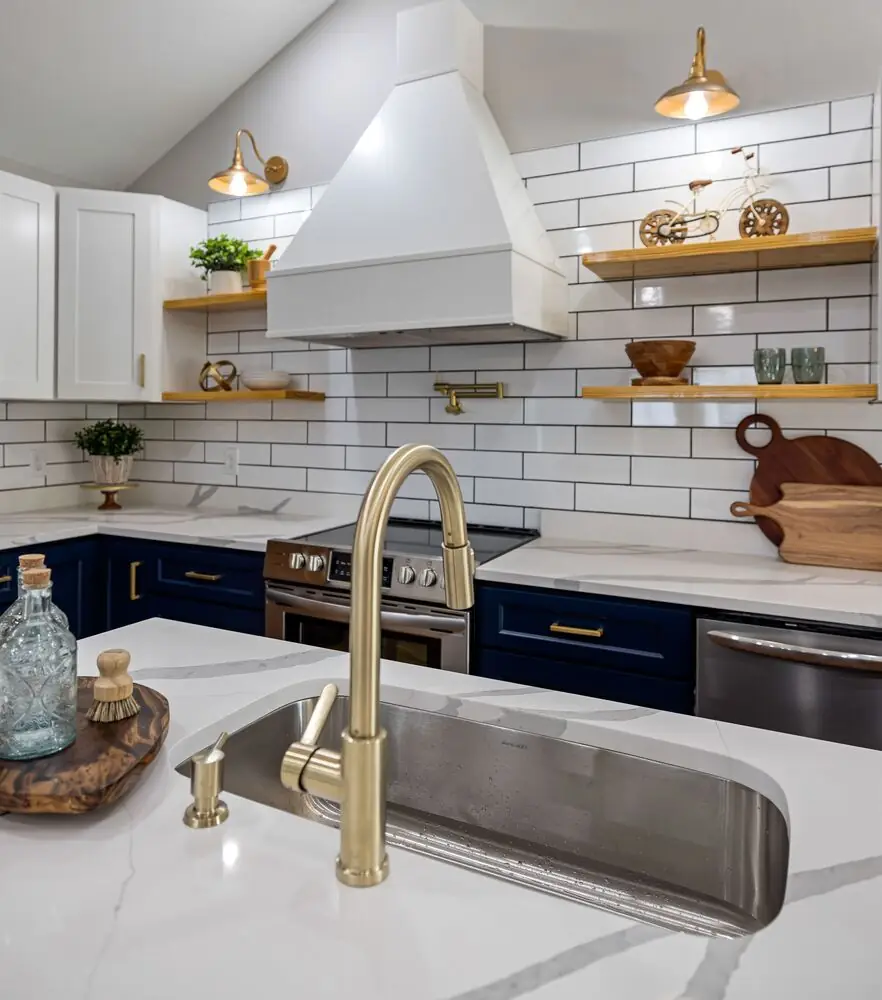
Brushed brass and champagne bronze: The strongest trending finish in new kitchen installations across the Lower Mainland in 2026. These warm metallic tones pair naturally with the warm neutral cabinet colours, wood tones, and earthy palettes that are defining current kitchen design. Brushed brass has the warmth of gold without the flashiness of polished brass - the satin texture diffuses light rather than reflecting it directly. Against forest green, navy, or warm cream cabinetry, brushed brass hardware creates a cohesive, considered result that reads as genuinely current.
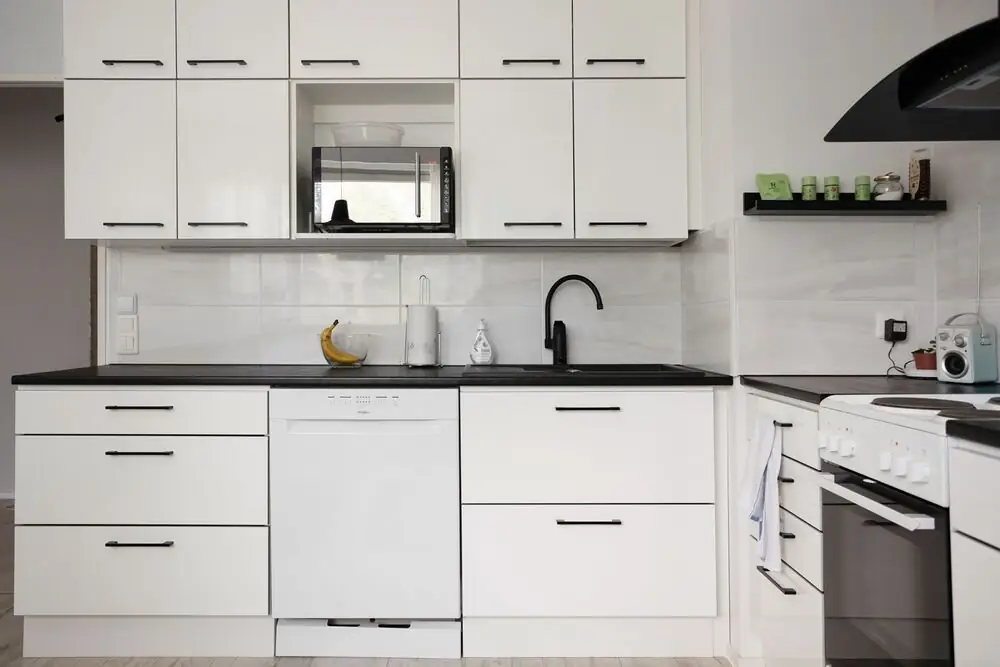
Matte black: Still the most versatile contemporary choice for kitchens with two-tone cabinetry, white or light cabinetry, or any design direction that benefits from crisp contrast. Against warm cream or white cabinets, matte black pulls create a graphic, confident look that holds up strongly at resale. Against dark cabinets, matte black reads as monochromatic - effective for a strong contemporary result.
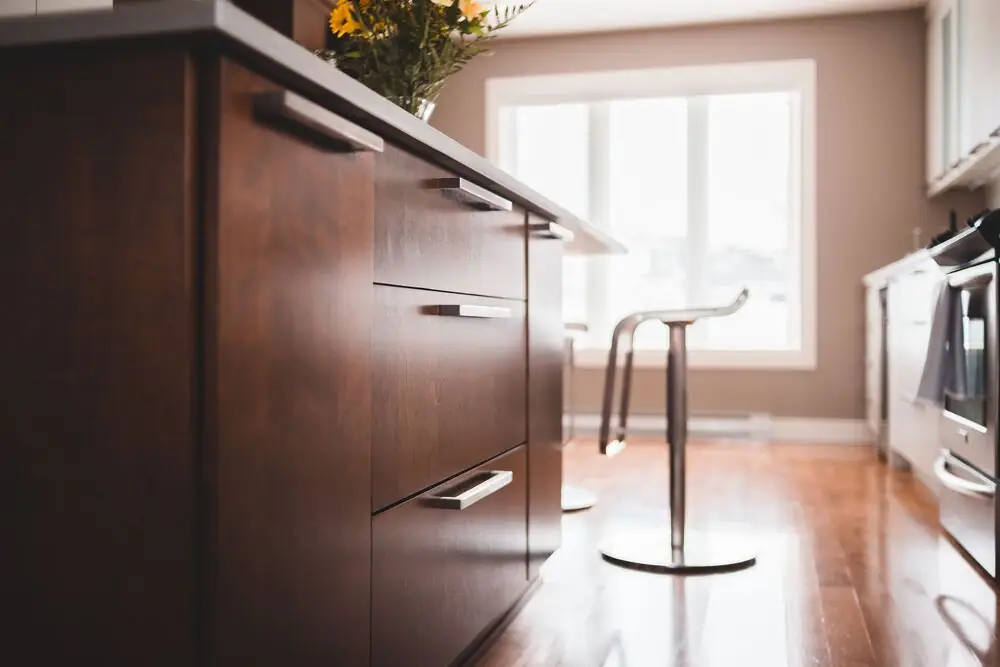
Brushed nickel: The reliable neutral - still the most widely used finish overall when both new renovations and updates are included. Works with almost everything. Doesn't make a statement in either direction. A safe choice that ages well and pleases most buyers at resale.
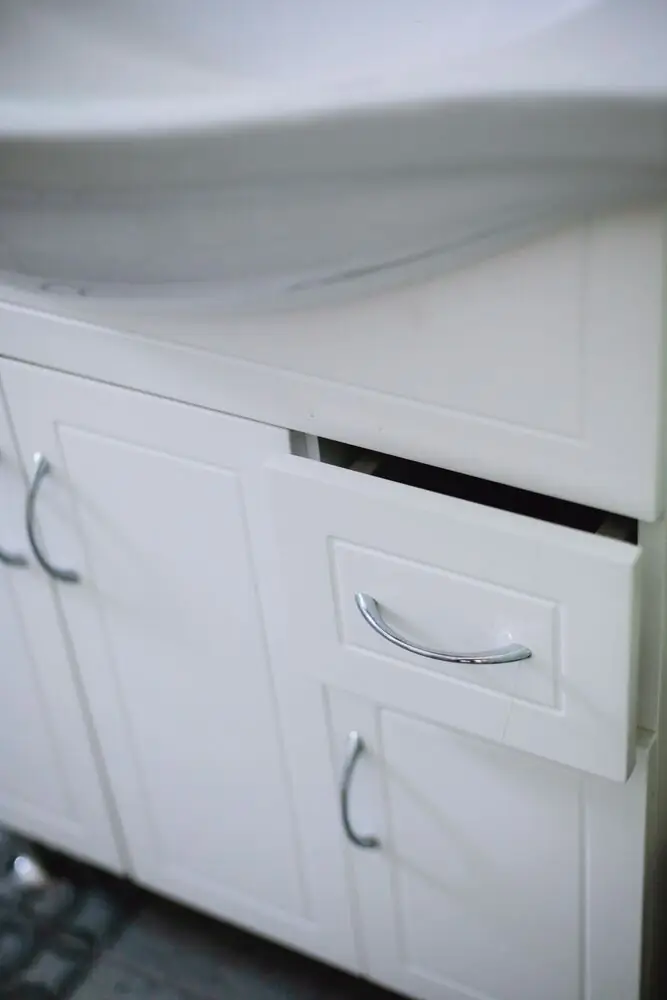
What's fading: Polished chrome is the finish most clearly on its way out in 2026 Lower Mainland kitchens. It reads as dated relative to the warmer and more distinctive finishes now available at comparable price points.
The mixed metal question: Mixing two finishes in the same kitchen - brushed brass on the cabinetry and matte black on the tapware, for example - can work very well when the mixing is intentional. The rule is to pick one primary finish for most hardware and introduce a second finish in one controlled area only - typically the island, a pantry tower, or the bathroom vanity. More than two finishes in the same space starts to feel unresolved.
Style - Matching Hardware to Cabinet Profile
The hardware style needs to suit the cabinet door profile. Getting this wrong produces the specific visual dissonance where the hardware looks right in the showroom but wrong on the actual cabinets.
Shaker doors - the most common cabinet style in Surrey, White Rock and Langley kitchens - suit both simple bar pulls and D-ring or cup pulls. Clean rectangular bar hardware suits contemporary Shaker directions. More traditional cup pulls or D-rings suit classic Shaker with more transitional design intent. Knurled or textured bar pulls add tactile detail that elevates the hardware beyond a plain bar without adding decorative complexity.
Slab or flat-panel doors - the contemporary alternative - suit sleek, minimal hardware. Long slim bar pulls that disappear against the flat surface, integrated recessed pulls that require no protruding hardware, or edge pulls that run the full height of the door. These choices let the cabinet face be the statement rather than the hardware.
Raised panel doors - more traditional profiles found in classic or colonial kitchen directions - suit smaller hardware with more traditional profiles. Simple round knobs, bin pulls, or bail pulls complement the decorative detail already present in the door without competing with it.
Placement - Where Hardware Goes on Cabinet Doors
Pulls on upper cabinet doors: centred vertically, positioned at the bottom of the door approximately 2 to 3 inches from the lower edge. This positions the pull where your hand naturally reaches when opening an upper cabinet.
Pulls on lower cabinet doors: centred vertically, positioned at the top of the door approximately 2 to 3 inches from the upper edge.
Pulls on drawers: centred horizontally and vertically on the drawer front.
Consistency across all cabinets is more important than any individual placement decision. Hardware that's positioned consistently reads as intentional. Hardware that varies from door to door reads as installed without a plan.
For a broader guide to how hardware decisions fit within the full cabinet design direction, kitchen cabinet ideas for Surrey, White Rock and Langley homes in 2026 covers colours, door styles, and storage alongside hardware as a complete system.
What Does Kitchen Cabinet Hardware Cost?
Quality cabinet hardware runs $16 to $80 CAD per piece for mid-range residential options in the current Lower Mainland market. A standard kitchen with 20 doors and 10 drawers - 30 pieces of hardware - runs $480 to $2,400 CAD in hardware cost depending on the quality and finish level. This is genuinely one of the best value-per-visual-impact investments available in a kitchen renovation.
Premium hardware from European manufacturers - Blum, Häfele, Sugatsune - runs $48 to $160 CAD per piece. For a full kitchen this adds up, but the quality difference in finish, weight, and feel is noticeable in daily use.
Installation of hardware during a renovation is typically included in the carpenter's scope. As a standalone replacement project after a renovation is complete, a carpenter typically charges $3 to $8 per piece installed.
Final Thoughts
Kitchen cabinet hardware is worth making a deliberate decision about rather than a last-minute one. The size, finish, style, and placement all work together to create a result that either makes the kitchen feel complete or leaves it feeling slightly unfinished. In Surrey, White Rock and Langley kitchens in 2026, the combination that's delivering the best results is pulls throughout in brushed brass or matte black at proportionally correct sizes, consistently placed. Simple, intentional, and genuinely better than builder-grade chrome knobs that cost less but look it.


