Schluter vs Traditional Shower Waterproofing: Key Differences Explained
Compare Schluter vs traditional shower waterproofing. How each system works, key differences in installation, moisture control, and which may suit your project.
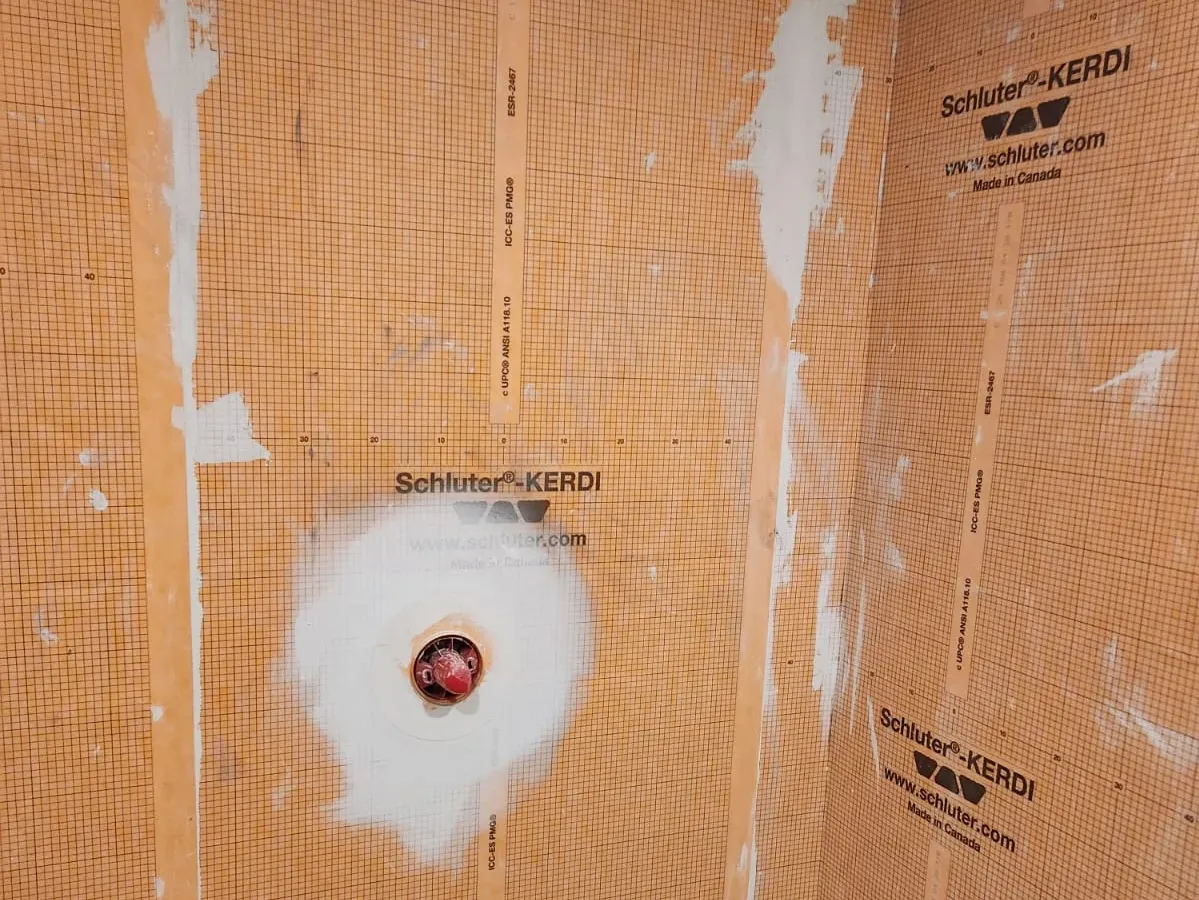
Schluter Waterproof System vs Traditional Shower Waterproofing: What’s the Difference?
When building a tiled shower, one of the most important parts is something you don’t see, the waterproofing system behind the tile.
Many homeowners believe tile and grout stop water, but that is not the case. Water can pass through grout and reach the structure behind the walls and floor, which is why proper waterproofing is critical.
Two common approaches are:
- Schluter waterproof systems (bonded systems)
- Traditional shower waterproofing systems
Both methods are widely used, but they work very differently.
What Is a Schluter Waterproof System?
A Schluter system (often called a KERDI system) is a surface waterproofing system. This means the waterproof layer sits directly behind the tile.
Key features:
- Uses a sheet membrane (like KERDI) applied under the tile
- Fully bonded system (everything is sealed together)
- Includes integrated parts like drains, trays, and panels
- Prevents water from soaking into the substrate
The system creates a watertight layer directly under the tile, so water does not travel deeper into the structure.
What Is a Traditional Shower Waterproofing System?
Traditional systems are often called “water in, water out” systems.
Key features:
- Waterproofing is located below the mortar bed (floor)
- Uses a PVC or rubber liner under the shower floor
- Walls often use cement board + liquid waterproofing or moisture barrier
- Water passes through tile and mortar before reaching the liner
In this system, the mortar bed can absorb water, and the design allows water to drain out slowly through the system.
Key Differences (Simple Breakdown)
1. Where the Waterproofing Sits
Schluter System
- Waterproofing is directly under the tile (surface level)
Traditional System
- Waterproofing is below the mortar (deeper in the system)
This is one of the biggest differences.
2. How Water Is Managed
Schluter System
- Water is stopped immediately at the surface
- The structure behind stays dry
Traditional System
- Water goes through tile and mortar
- Then drains out through the liner system
Traditional systems are designed to handle water, not stop it right away.
3. Moisture Inside the Shower Base
Schluter System
- Minimal water absorption
- Dries faster
Traditional System
- Mortar bed can stay damp
- Takes longer to dry
Because traditional systems allow water into the base, moisture can remain for longer periods.
4. Installation Process
Schluter System
- Pre-designed system with matching components
- Often fewer steps
- Requires careful seam sealing
Traditional System
- Multiple layers built step by step
- More manual work (mud bed, liner, etc.)
- Installation process is longer
Schluter systems are often described as reducing installation time due to their integrated design.
5. Risk of Installation Errors
Both systems depend heavily on proper installation.
Schluter System
- Requires precise sealing of seams and connections
- Errors often happen at joints or overlaps
Traditional System
- More steps = more opportunities for mistakes
- Common issues include improper slope or liner installation
In both systems, the installer’s experience is more important than the system itself.
6. Flexibility and Customization
Schluter System
- Comes with prefabricated components (trays, boards)
- Can be customized, but within system limits
Traditional System
- Fully custom-built on site
- Can adapt to almost any shape or size
7. Repair and Longevity Considerations
Schluter System
- Designed to prevent water from reaching deeper layers
- Failures (if they happen) are usually at seams
- 15 year warranty when installed by a schluter trained installer
Traditional System
- Has been used for decades
- Can last a long time when built correctly
Both systems can last many years if installed properly.
When a Schluter System May Make Sense
A Schluter-type system is often chosen when:
- A fully waterproof surface system is preferred
- Faster installation is important
- A modern, integrated system is desired
- Reducing moisture buildup is a priority
When a Traditional System May Make Sense
A traditional system is often chosen when:
- A custom-built shower base is needed
- The installer is experienced with traditional methods
- Budget is a consideration
- Simpler materials are preferred
Important Note: Tile Is Not Waterproof
One of the most important things to understand:
Tile and grout are not waterproof.
The success of any shower depends on what is installed behind the tile, not the tile itself.
Final Thoughts
Both Schluter waterproof systems and traditional shower systems are widely used and can perform well when installed correctly.
The main difference comes down to:
- Schluter: Stops water at the surface
- Traditional: Manages water after it passes through
The best choice often depends on:
- Installation quality
- Project budget
- Design requirements
- Personal preference
Understanding how each system works can help homeowners make more informed decisions when planning a bathroom renovation.


