Should You Tile Your Shower Ceiling? Surrey Guide
Should you tile your shower ceiling? Learn when it makes sense in Surrey, White Rock and Langley homes, what it costs, and the moisture benefits in BC's climate.
Should You Tile Your Shower Ceiling? What Surrey, White Rock and Langley Homeowners Need to Know
⏱ Estimated Reading Time: 5–6 minutes
Most bathroom renovations in Surrey, White Rock and Langley give the shower walls and floor a lot of thought - tile selection, grout colour, waterproofing system. The ceiling? It usually gets painted white and called done. But once you've seen a shower tiled all the way to the ceiling, it's hard to unsee what a difference it makes. And in BC's wet coastal climate, there's a practical case for it too.
Here's the honest breakdown - what tiling your shower ceiling actually involves, when it makes sense, when it doesn't, and what it costs in the Lower Mainland.
Why the Ceiling Matters More Than People Think
Your shower ceiling takes more moisture abuse than most people realise. Every hot shower fills the enclosure with steam that rises directly to the ceiling. If that ceiling is painted drywall - even with a good quality moisture-resistant paint - you're asking paint and drywall to do a job they weren't really designed for. Over time, especially in BC's already humid climate, that moisture leads to paint peeling, drywall softening, and eventually mould. You won't always see it happening until it's already a problem.
A tiled ceiling is waterproof. Steam hits the tile, condenses, runs down to the walls, and exits through the drain. No absorption. No mould growing behind the surface. No repainting every few years. This is the practical argument, and in Surrey and White Rock's climate, it carries real weight.
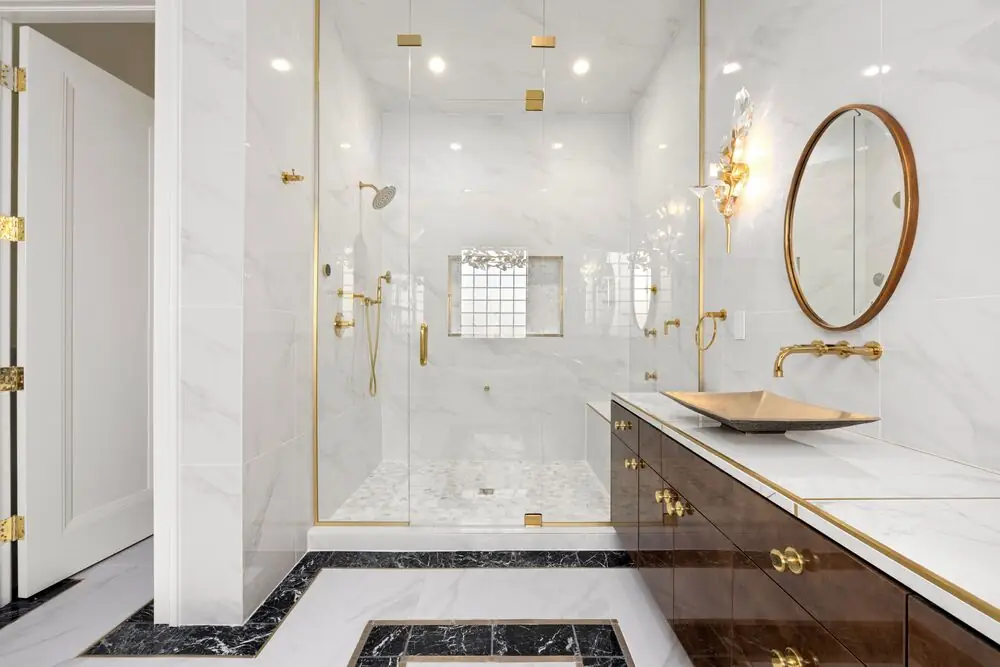
The aesthetic argument is just as strong. A shower tiled from floor to ceiling - walls and ceiling - feels genuinely luxurious. The space feels more finished, more intentional, and noticeably larger because there's no visual interruption where the tile stops and a painted ceiling begins. Most homeowners who do it once say they'll never go back.
When You Should Tile Your Shower Ceiling
There are a few situations where tiling the ceiling is clearly the right call.
If you have a steam shower or plan to add one, tiling the ceiling isn't optional - it's required. Steam showers produce continuous moisture at a level that paint and drywall simply cannot handle. The ceiling must be waterproofed and tiled, and it should ideally have a slight slope to prevent water from dripping directly onto bathers. For any steam shower installation in Surrey or White Rock, your tile setter and contractor will insist on a tiled, sloped ceiling as part of the proper scope.
If your shower has a rainfall or ceiling-mounted showerhead, tiling the ceiling makes even more sense. Water is being directed upward and across the ceiling surface with every use. That's a lot of direct moisture contact for paint to handle long-term.
If you're doing a full bathroom renovation where the ceiling is being opened up anyway, adding the tile to the ceiling while everything else is being done adds relatively modest cost compared to doing it as a standalone project later. The tile setter is already on site. The scaffolding or work platform is already set up. The waterproofing membrane extends naturally to the ceiling in a continuous system. The incremental cost is much lower than a separate ceiling tile job.
If you're going for a premium, cohesive look in a master ensuite - which is the dominant renovation direction in South Surrey and White Rock right now - a tiled ceiling is simply part of what that looks like. It's increasingly expected in higher-end renovation projects across the Lower Mainland.
When You Don't Need to Tile the Ceiling
Not every shower needs a tiled ceiling, and being honest about this is part of giving you useful advice.
If your shower has a standard wall-mounted showerhead and the ceiling is well above the spray zone - typically 10 feet or higher - the ceiling doesn't get the same level of direct moisture contact. A good quality bathroom paint on properly prepared moisture-resistant drywall or cement board performs adequately in these conditions, especially with a well-functioning exhaust fan running during and after showers.
If the bathroom has excellent ventilation and the shower is used for shorter periods without a lot of steam, the ceiling is less vulnerable. The combination of a well-sized exhaust fan, good airflow, and a ceiling that doesn't get directly wet is manageable without tile.
If budget is genuinely constrained and a choice needs to be made, prioritising waterproofing and tile quality on the walls and floor is more important than the ceiling. A properly waterproofed shower with excellent wall tile and a painted ceiling is a better outcome than a tiled ceiling over a poorly waterproofed shower structure.
What Does It Actually Cost?
Adding tile to a shower ceiling as part of a new shower build in Surrey or White Rock is relatively modest in cost - typically $880 to $1,520 CAD added to the tile setting scope, depending on the size of the shower and the tile format being used. The tile setter is already on site and ceiling tile installation adds time rather than a completely separate mobilization cost.
Waterproofing the ceiling - extending the membrane system from the walls up onto the ceiling surface - adds $360 to $520 CAD to the waterproofing scope. This is the step that most homeowners don't realize needs to happen, and it's the step that makes the whole thing work properly. A tiled ceiling without a proper waterproofing membrane behind it is still at risk from moisture getting through grout joints over time.
As a standalone retrofit in an existing finished shower - removing the existing ceiling surface, preparing the substrate, installing waterproofing membrane, and tiling - the cost is higher because of the additional demolition and preparation involved. Expect $1,900 to $3,800 CAD depending on scope and accessibility.
For tile selection on a shower ceiling, the same principles apply as for shower walls. Porcelain is the best performer in BC's humid conditions - non-porous, easy to clean, and available in large formats that reduce grout lines. For full guidance on shower tile options, what is the best tile for a bathroom shower in Surrey and White Rock covers every material in detail.
Practical Things to Know Before You Decide
Tiling a ceiling is technically more demanding than tiling a wall. Gravity works against you - tiles need to be held in place while the adhesive cures, which typically means using a mortar with good non-sag properties and working in smaller sections. An experienced tile setter handles this as a matter of course. For a homeowner attempting a DIY ceiling tile installation, the risk of tiles slipping before the adhesive sets is real and the consequences of a dropped tile are unpleasant.
Grout on a shower ceiling needs to be epoxy or a high-quality polymer-modified grout - the same standard as the rest of the shower. Cement grout on a shower ceiling is more prone to mould growth in BC's humid climate because moisture condenses and sits on horizontal surfaces longer than it does on vertical walls. For the full guide to shower grout, what is the best grout for a bathroom shower in Surrey and White Rock covers all the options.
Final Thoughts
Should you tile your shower ceiling? If you're already doing a full shower renovation, yes - strongly. The additional cost during an active renovation is modest, the performance benefit in BC's climate is real, and the visual result is noticeably better. If you have a steam shower, a ceiling-mounted showerhead, or you're investing in a premium ensuite, it's not really optional. If you're doing a basic cosmetic update on a tight budget, prioritize the walls and floor first - but plan to come back to the ceiling when the opportunity allows.


