Bathroom Fixture Heights Guide: Surrey & White Rock
How high should a bathroom mirror, light or towel bar go? Standard mounting heights for every bathroom fixture and accessory, for Surrey and White Rock homes.
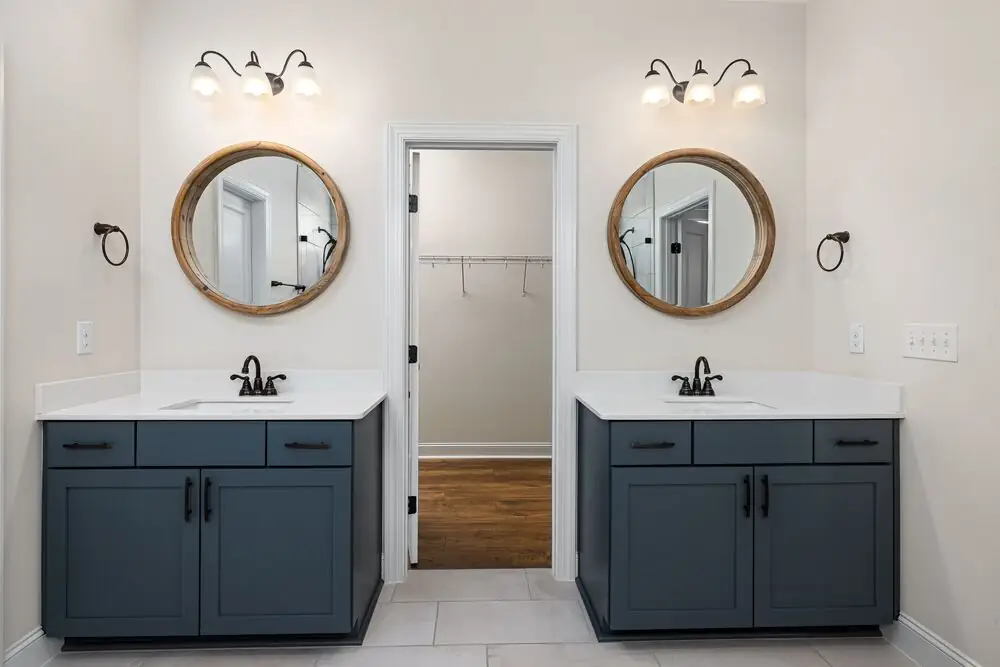
Bathroom Fixture and Accessory Heights for Surrey and White Rock Renovations
⏱ Estimated Reading Time: 5–6 minutes
Quick answer: Most bathroom accessories are mounted at standard heights measured from the finished floor. Vanity sconces go about 60 to 66 inches up, towel bars about 48 inches, toilet paper holders about 26 inches, and robe hooks about 70 inches. In the shower, the controls usually sit 38 to 48 inches high and the showerhead about 80 inches. Adjust these for the people using the room, especially for tall family members or accessibility needs.
At a glance (from the finished floor):
- Vanity counter: 32 to 36 inches
- Mirror centre: about 60 to 65 inches
- Vanity sconces: about 60 to 66 inches
- Light above the mirror: about 75 to 80 inches
- Towel bar: about 48 inches
- Toilet paper holder: about 26 inches
- Robe hook: about 70 inches
- Shower controls: 38 to 48 inches
- Showerhead: about 80 inches
Getting the tile, vanity and fixtures right is only part of a bathroom renovation. Where every mirror, light, bar and hook is mounted decides whether the room feels comfortable and well planned, or slightly off every time you use it. A mirror that’s too high, a towel bar behind the door swing, or a toilet paper holder you have to twist to reach are small mistakes that last for years. Here are the standard mounting heights for bathrooms in Surrey and White Rock.
Vanity and Countertop Height
Older vanities were often about 30 to 32 inches high. Today, most people prefer a comfort-height vanity of 34 to 36 inches, close to kitchen counter height, which means less bending at the sink. A lower vanity can still make sense in a children’s bathroom or where someone uses a wheelchair. Our guide to standard bathroom measurements covers vanity widths, depths and clearances.
Mirror Height
A good rule is to centre the mirror at eye level for the average user, which is usually about 60 to 65 inches from the floor. The bottom of the mirror typically sits 5 to 10 inches above the counter or backsplash, high enough to clear the faucet and leave room for splashes. The top of the mirror should usually be a little higher than the tallest person who uses it. With a double vanity, the mirrors or one long mirror should line up across both sinks.
Vanity Lighting
Sconces mounted on either side of the mirror give the most flattering, shadow-free light for the face. They’re usually placed about 60 to 66 inches from the floor, close to eye level, and roughly 36 to 40 inches apart. If space only allows one fixture, a light bar above the mirror is typically mounted about 75 to 80 inches from the floor. Our guide to bathroom lighting explains how to layer light in a bathroom.
Towel Bars, Rings, and Hooks
Towel bars are usually mounted about 48 inches from the floor, which lets a folded bath towel hang without touching the floor. Bars are typically 18 to 24 inches long for a single towel, and 30 inches or more if two towels will hang side by side. A hand towel ring or short bar near the vanity is usually placed about 20 inches above the counter, within easy reach of the sink. Robe and towel hooks are typically mounted about 70 inches up, or lower in a children’s bathroom. Make sure bars and hooks are clear of door swings and not blocked by the shower glass.
Toilet Paper Holder
The toilet paper holder is usually mounted about 26 inches from the floor and roughly 8 to 12 inches in front of the front edge of the toilet bowl, on the side wall or vanity. Placed this way, it’s easy to reach without twisting. Recessed holders built into the wall keep a small bathroom feeling uncluttered, but the wall framing needs to be planned for them before drywall goes up.
Shower and Tub Fixtures
Shower controls are usually placed 38 to 48 inches from the floor, and ideally near the entry so you can turn on the water without stepping under the spray. A standard showerhead sits about 80 inches up, higher for tall users or for rain heads mounted on the ceiling. A handheld shower on a slide bar suits people of different heights. Built-in niches are commonly placed between 48 and 60 inches. In a bathtub, the spout sits a few inches above the tub rim. Our guide to standard shower sizes and dimensions covers shower layout in more detail.
Grab Bars and Accessibility
Grab bars are commonly mounted about 33 to 36 inches from the floor, in the shower, beside the toilet and by the tub. They need solid backing in the wall, so add blocking between the studs during a renovation even if you don’t install the bars yet. That way they can be added later without opening the wall. Our guide to accessible bathroom renovations covers planning a bathroom for aging in place.
Plan Before the Drywall Goes Up
Most of these heights depend on what’s inside the wall. Sconces need electrical boxes in the right places, towel bars and grab bars need solid backing, and recessed holders and medicine cabinets need framing. Mark every fixture on the wall with your contractor before drywall and tile go up, and adjust for the people who will actually use the room.
Final Thoughts
Standard mounting heights make a bathroom comfortable for most people: vanity sconces at about 60 to 66 inches, mirrors centred around eye level, towel bars at about 48 inches, toilet paper holders at about 26 inches, shower controls at 38 to 48 inches and the showerhead at about 80 inches. Use them as a starting point, adjust for your household, and plan the wiring and backing early. Your Surrey or White Rock bathroom will feel well planned every time you use it.


