What Is an HRV? Surrey, White Rock & Langley Guide
What is an HRV and does your Surrey, White Rock or Langley home need one? Learn how it manages moisture and fresh air in BC's damp coastal climate.
What Is an HRV and Does Your Surrey, White Rock or Langley Home Need One?
⏱ Estimated Reading Time: 7–8 minutes
If you've been through a recent renovation consultation or looked at newer home construction in Surrey, White Rock or Langley, you may have come across the term HRV, often mentioned alongside heating, ventilation, and energy efficiency. It's one of those pieces of home mechanical equipment that most homeowners have never had to think about, right up until a contractor mentions it or they notice persistent condensation on their windows.
Here's what an HRV actually is, why it matters so much in BC's specific climate, and how to tell whether your home needs one.
What Is an HRV?
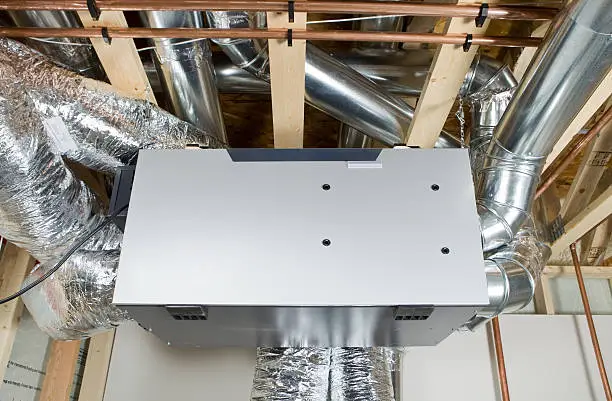
HRV stands for Heat Recovery Ventilator. It's a mechanical ventilation system that continuously exchanges the stale, humid air inside your home for fresh air from outside, while recovering most of the heat from the outgoing air so you're not simply throwing your heating out the window.
That last part is the clever bit. Older approaches to ventilation just exhausted indoor air and let cold outdoor air leak in to replace it, which wastes the energy you spent heating your home. An HRV runs the outgoing warm, stale air and the incoming cold, fresh air past each other through a heat exchanger. The heat transfers from one airstream to the other without the two mixing, so the fresh air entering your home is pre-warmed by the air leaving it. You get continuous fresh air without the heating penalty.
The result is a home that's constantly refreshed with outdoor air, with the indoor humidity and stale air removed, and with most of the heating energy retained. In a climate like ours, that combination matters more than most homeowners realize.
Why HRVs Matter So Much in BC's Climate
This is where the Lower Mainland's specific conditions make an HRV more relevant than it would be in a drier climate.
Our climate is damp for much of the year. From October through April, outdoor humidity is high, and indoor humidity climbs from everyday living, cooking, showering, laundry, even breathing all add moisture to the air inside a home. In a well-sealed modern home, that moisture has nowhere to go. It builds up, settles on cold surfaces as condensation, and creates exactly the conditions that lead to the mould and mildew problems BC homes are prone to.
An HRV directly addresses this. By continuously exhausting the humid indoor air and bringing in fresh air, it manages the moisture load that our climate produces. The persistent window condensation, the musty smell in certain rooms, the mould that keeps returning in corners and closets, these are frequently symptoms of inadequate ventilation in a home that's holding too much moisture. An HRV is the systematic solution to that problem rather than the room-by-room patchwork of running bathroom fans and cracking windows.
There's a second reason it matters more now than in the past: homes have gotten tighter. As homes are built and renovated to be more energy-efficient, they're sealed more thoroughly against air leakage. That's good for energy bills, but it also means a home can no longer rely on accidental drafts to exchange its air. The tighter and more efficient a home becomes, the more it needs deliberate mechanical ventilation to stay healthy. Efficiency and ventilation go hand in hand, which is why HRVs come up so often in the same conversation as insulation, windows, and heat pumps.
What an HRV Actually Does for Your Home
Beyond the technical function, the day-to-day benefits are what make an HRV worth understanding.
It manages moisture and reduces condensation. This is the headline benefit in our climate. Steady removal of humid air means less condensation on windows, less dampness in the home, and a meaningfully lower risk of the mould problems BC's humidity encourages.
It improves indoor air quality. A continuous supply of fresh outdoor air dilutes and removes the indoor pollutants that accumulate in a sealed home, cooking odours, off-gassing from materials and furnishings, carbon dioxide from occupants, and general staleness. Homes with good ventilation simply feel fresher, and for households with allergies or respiratory sensitivities, the air-quality improvement is genuinely felt.
It does this without wasting heat. Because the HRV recovers most of the heat from the outgoing air, you get all of the fresh-air and moisture-management benefit without the energy penalty of simply venting warm air outside. This is what makes continuous ventilation practical rather than expensive.
Does Your Home Need One?
Whether your home needs an HRV depends on how it was built, how tight it is, and whether you're experiencing the symptoms of inadequate ventilation.
New construction and secondary suites generally require mechanical ventilation. Current building code requires new dwelling units to have a deliberate ventilation system, and an HRV is the common way to meet that requirement in our climate. If you're building a laneway home, a garden suite, an addition, or creating a legal secondary suite, ventilation will be part of the mechanical scope. Because the specific requirement depends on the project and the current code, your contractor or municipality will confirm exactly what's required for your build, rather than something to assume from a general description.
Older homes often benefit from one even when not strictly required. Many older Surrey, White Rock and Langley homes were built loose enough to exchange air through natural leakage, but if such a home has been renovated with new windows, added insulation, and better sealing, it may have become tight enough that ventilation is now inadequate, and the condensation and moisture symptoms appear. In these homes, adding an HRV during a renovation resolves the moisture problem that the efficiency improvements inadvertently created.
The symptom check is the practical test. If your home has persistent window condensation through the winter, a musty or stale smell, recurring mould in corners or closets, or air that just feels stagnant, these are signs that your ventilation isn't keeping up with the moisture and stale-air load. An HRV is worth discussing as the systematic fix.
HRV and the Rest of Your Home's Systems
An HRV works best as part of a coordinated approach to your home's air and comfort rather than as an isolated add-on.
It pairs naturally with an energy-efficiency renovation, since the tighter and more efficient you make a home, the more it needs deliberate ventilation. If you're adding a heat pump or upgrading insulation and windows, ventilation belongs in the same conversation. For how heat pumps fit into this picture, see our guide to heat pumps for BC's coastal climate.
It also complements, rather than replaces, targeted exhaust like bathroom fans. A good bathroom exhaust fan handles the acute moisture spike of a shower at the source, while an HRV handles the whole home's continuous ventilation. The two work together, and both matter in a BC bathroom. For choosing the right bathroom exhaust, our guide to the best bathroom exhaust fan covers what to look for in our climate.
Final Thoughts
An HRV is one of those pieces of home mechanical equipment that's easy to overlook until you understand what it does, and in BC's damp climate, what it does is genuinely important. It continuously refreshes your home with outdoor air, manages the moisture that our climate produces, reduces condensation and mould risk, and improves indoor air quality, all while recovering most of the heat that would otherwise be wasted. New construction and suites typically require mechanical ventilation, and many tighter, renovated older homes benefit from one even when it isn't strictly required. If your home has persistent condensation, dampness, or stale air, an HRV is worth discussing with your contractor as the systematic solution, and confirming the specific ventilation requirement for any new build or suite with your contractor or municipality is the right first step.


