Kitchen Drawers vs Cabinets: Surrey & White Rock
Drawers or doors for your lower kitchen cabinets? Compare access, storage, cost and where each works best in a Surrey or White Rock kitchen renovation.
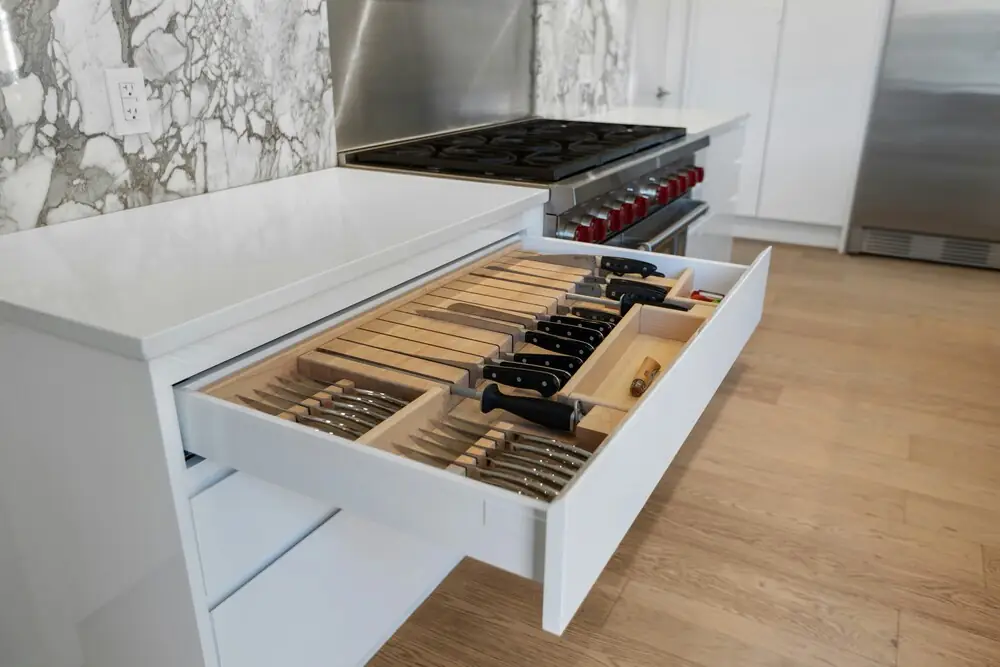
Kitchen Drawers vs Cabinet Doors for Surrey and White Rock Renovations
⏱ Estimated Reading Time: 5–6 minutes
Quick answer: For most lower kitchen cabinets, drawers are easier to use than doors, because everything is visible and reachable from above without kneeling or reaching into the back. They cost more than doors with shelves, since each drawer needs its own box and hardware. Most renovated kitchens use mostly drawers, with doors kept for the sink base, tall items, and some corners.
At a glance:
- Drawers: easier access, better visibility, more usable storage, higher cost
- Doors with shelves: lower cost, flexible for tall or awkward items, harder to reach the back
- Best for drawers: pots and pans, dishes, utensils, pantry items
- Best for doors: sink base, baking sheets and trays, budget areas
If you’re planning a kitchen renovation in Surrey or White Rock, one of the decisions that will affect your daily life the most is easy to overlook: what goes in the lower cabinets. Older kitchens are full of base cabinets with doors and a single shelf, where pots get stacked and the back of the cabinet becomes a dark place things disappear. Modern kitchens have shifted heavily toward drawers. Here’s how the two compare and where each makes sense.
Why Drawers Are So Popular
The biggest advantage of drawers is access. When you pull a drawer open, everything inside comes out to you, visible from above. There’s no kneeling down, no moving the front items to reach the back, and no forgotten pans hiding in the corner. Full-extension drawer slides bring the entire drawer out of the cabinet, so even the back is easy to reach. For anyone with knee or back concerns, or planning to stay in the home long term, that ease of use matters. Our guide to accessible kitchen renovations covers more ways to make a kitchen easier to use.
Drawers also make storage more efficient. Items can be organized with dividers and inserts so everything has a place, and you can see at a glance what you have. Many homeowners find they actually use more of their lower cabinet space with drawers than with shelves.
Where Doors Still Make Sense
Drawers aren’t the answer everywhere. The sink base is the most common place for doors, because the sink, drain, and plumbing take up the space where drawers would go. Some cabinet makers offer U-shaped drawers that wrap around the plumbing, but doors remain the norm there. Tall, flat items like baking sheets, cutting boards, and trays are often better stored vertically behind a door with dividers. Corner cabinets usually need doors or specialized hardware. Our guide to kitchen corner cabinet solutions covers the options for that awkward space.
The Cost Difference
Drawers cost more than doors. A base cabinet with three drawers needs three drawer boxes, three sets of slides, and three drawer fronts, while a cabinet with a door needs one door, two hinges, and a shelf. Across a whole kitchen, the difference adds up. Many homeowners decide it’s worth it in the cabinets they use most, and save with doors in less-used areas. Our guide to kitchen cabinet ideas covers how cabinet choices fit into the overall budget.
Choosing Kitchen Drawer Sizes
Matching drawer depth and width to what goes inside

A good drawer layout matches drawer depth to what goes inside. A common base cabinet stacks a shallow drawer over one or two deeper ones.
By depth, in a typical base cabinet
Shallow top drawer
Utensils, cutlery, or spices
One or two deeper drawers below
Pots, bowls, or containers
By width
-
Wide drawers30 to 36 inches across
Ideal for pots and pans. Hold large items and their lids side by side.
-
Narrower drawersCompact widths
Suit spices, oils, and kitchen tools.
Drawers for Pots and Pans
Pots and pans are the strongest case for drawers. In a cabinet with doors, they get stacked, and the one you need is always at the bottom. In a deep, wide drawer, they sit side by side with lids stored in a divider, and you can grab any one without moving the others. Choose sturdy slides rated for heavy loads, since a full drawer of cast iron and stainless steel is heavy. Our guide to storing pots and pans covers more organization ideas.
The Middle Ground: Roll-Outs and Inner Drawers
If you prefer the look of doors or want to keep costs down, roll-out shelves behind cabinet doors offer many of the same benefits. You open the door, then pull the shelf out like a drawer. Another option is inner drawers, where a single large door hides several drawers inside, giving a clean, uninterrupted look across the front of the cabinets. These hybrid solutions work well in kitchens where you want both a streamlined appearance and easy access.
Quality Hardware Matters
Whatever you choose, the hardware determines how well it works over time. Soft-close, full-extension drawer slides glide smoothly and close quietly, and they’re worth the investment in a kitchen that’s used every day. Sturdy drawer boxes made from plywood or solid materials hold up far better than thin particleboard. Since drawers get opened and closed thousands of times, cutting corners on hardware usually means replacing it sooner.
Final Thoughts
For most lower kitchen cabinets, drawers are easier to use, more efficient, and better organized than doors with shelves, which is why they dominate modern kitchen renovations in Surrey and White Rock. Doors still have a place under the sink, for tall flat items, in corners, and in less-used areas where they help manage the budget. Plan drawer sizes around what you store, invest in good slides, and consider roll-outs or inner drawers where doors make more sense. The result is a kitchen where everything is easy to find and reach.


