Make a Small Bathroom Feel Bigger: Surrey Guide
Got a small bathroom in Surrey or White Rock? These proven design and renovation tips will make it feel noticeably larger without knocking down walls.
How to Make a Small Bathroom Feel Bigger in Surrey and White Rock
⏱ Estimated Reading Time: 6–7 minutes
Small bathrooms are one of the most common complaints from homeowners in Surrey and White Rock - particularly in townhouses, condos, and the older detached homes throughout Newton, Cloverdale, and the South Surrey area where main floor bathrooms were often built to the minimum functional standard. The good news is that a small bathroom does not have to feel small. Some of the most dramatic transformations in bathroom renovation come from spaces that were genuinely tight before the work began.
Whether you are planning a full renovation or looking for targeted changes that make the biggest visual difference, here is what actually works - and what does not - when it comes to making a small bathroom feel bigger in BC's housing stock.
Start With the Floor - It Sets the Tone for the Whole Room

The floor is the first thing your eye registers when you walk into a bathroom, and the wrong tile choice can make a compact space feel even more cramped. Two things matter most: tile size and colour.
Larger format tiles - think 24 by 24 inches or 24 by 48 inches - dramatically reduce the number of grout lines visible in a small floor area. Grout lines break up the visual field and make the eye register the room as smaller than it is. A continuous, large tile surface does the opposite - it lets the floor read as one uninterrupted plane, which gives the room a more open, expansive feel.
Colour matters just as much. Light tones - soft white, warm cream, pale grey - reflect light and make floors recede visually. Dark flooring can look striking in a larger bathroom but in a small space it tends to visually lower the ceiling and close the room in. For most Surrey and White Rock homeowners working with a compact main bathroom or ensuite, a light large-format porcelain floor tile is the single most reliable foundation for a bigger-feeling space.
Go Vertical With Your Tiles on the Walls

The same principle that applies to floors works vertically. Running wall tiles in a vertical format - or using large-format tiles on shower walls with minimal horizontal grout interruption - draws the eye upward and makes the ceiling feel higher. This is particularly effective in Surrey and White Rock bathrooms where ceiling heights tend to run between 8 and 9 feet - standard, but not generous.
A continuous tile surface from floor to ceiling on at least one wall, ideally the shower or feature wall, creates a seamless vertical line that adds perceived height significantly. When the same tile extends from the shower into the rest of the bathroom without a break - particularly with matching or complementary floor tile - it creates a cohesive, flowing look that makes the room feel like one intentional space rather than a series of small, separate surfaces.
A Floating Vanity Changes Everything

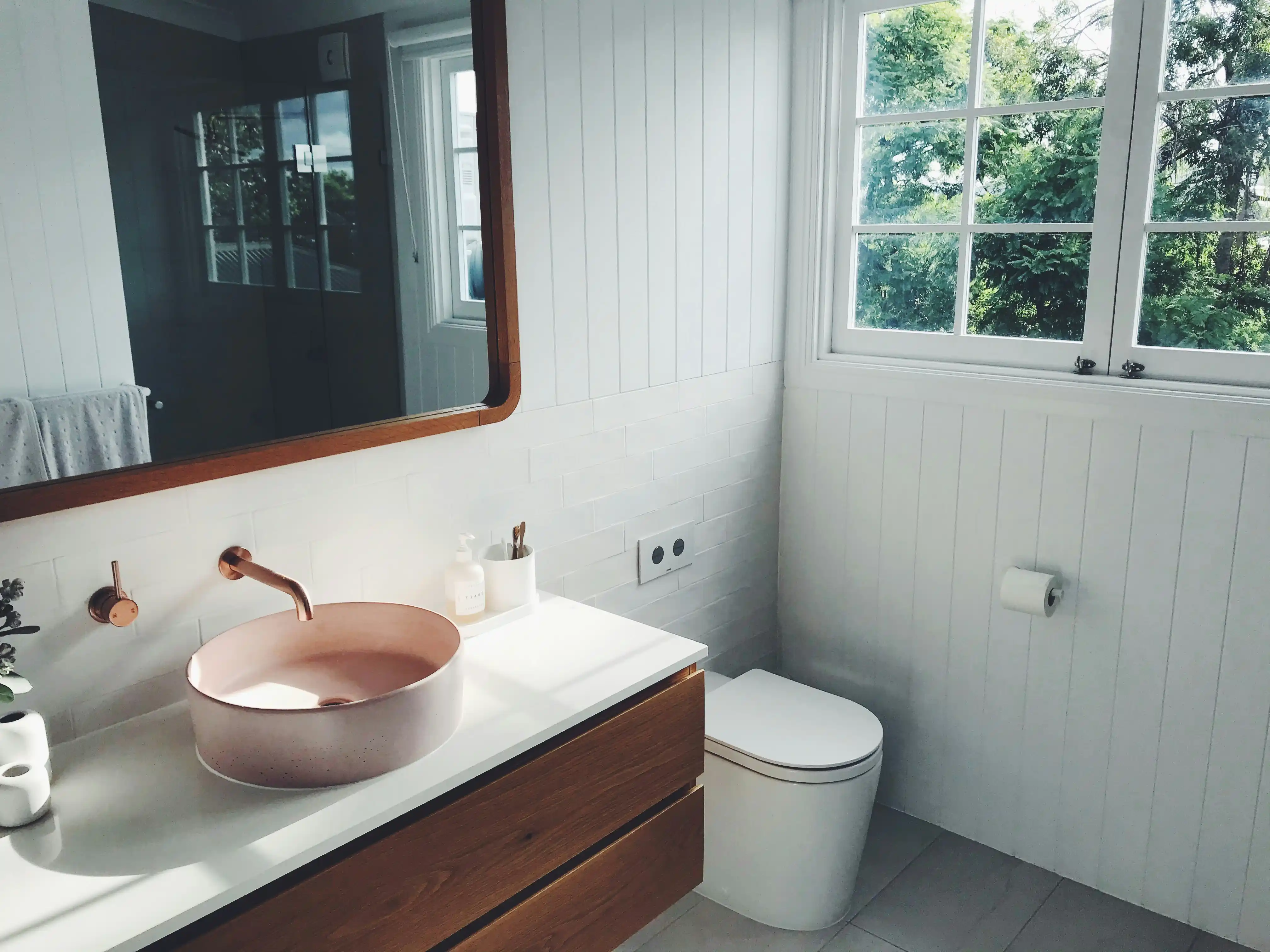
If your bathroom still has a floor-mounted vanity, switching to a floating or wall-mounted vanity is one of the most impactful single changes you can make to a small bathroom. The visible floor space underneath the cabinet immediately makes the room feel larger - the eye reads the continuous floor surface and registers more open space. The effect is particularly pronounced in bathrooms under 50 sq ft, which describes a significant portion of main bathrooms in Surrey's townhouse and older detached home stock.
A floating vanity also makes cleaning the floor significantly easier, which is a practical benefit that Surrey and White Rock homeowners with busy households tend to appreciate quickly. Pair it with under-vanity LED strip lighting - a soft warm glow along the floor - and the effect moves from functional to genuinely spa-like. For a full breakdown of the differences between vanity types, which bathroom vanity is right for your Surrey or White Rock home covers the comparison in detail.
Frameless Glass Is Your Best Friend

Shower enclosures with heavy frames, thick profiles, or solid doors visually divide the bathroom into smaller sections. In a compact space, that division makes everything feel tighter. Frameless glass shower enclosures - whether a full frameless door, a partial glass screen, or a walk-in design with no door at all - do the opposite. The eye passes straight through the glass and reads the full depth of the shower as part of the room.
This is one of the reasons why frameless glass has become standard in Surrey and White Rock bathroom renovations at the mid-range and above. It is not purely an aesthetic choice - it is a spatial strategy that works reliably in small and medium bathrooms alike.
If the budget for a full frameless enclosure is tight, even replacing a framed door with a simple frameless pivot door makes a meaningful difference. The key is eliminating the visual weight of heavy framing.
Mirrors, Lighting, and Perceived Space

Mirrors are one of the oldest and most reliable tools for making a small bathroom feel larger, and in 2026 the options have expanded well beyond a basic builder-grade rectangle above the vanity. A large-format mirror - one that fills the full width of the vanity wall and extends close to the ceiling - reflects the room back on itself and effectively doubles the visual depth of the space. Backlit LED mirrors add warm, even task lighting while also contributing to the sense of depth and openness.
Lighting strategy matters too. A single overhead fixture in the centre of a small bathroom creates harsh shadows and a flat, institutional feel. Layered lighting - ambient pot lights supplemented by dedicated vanity task lighting - fills the room more evenly and eliminates the shadow patterns that make small spaces feel closed in. For a complete guide to bathroom lighting strategy, how do you choose the right bathroom lighting in Surrey and White Rock walks through every layer.
Storage That Does Not Eat the Room
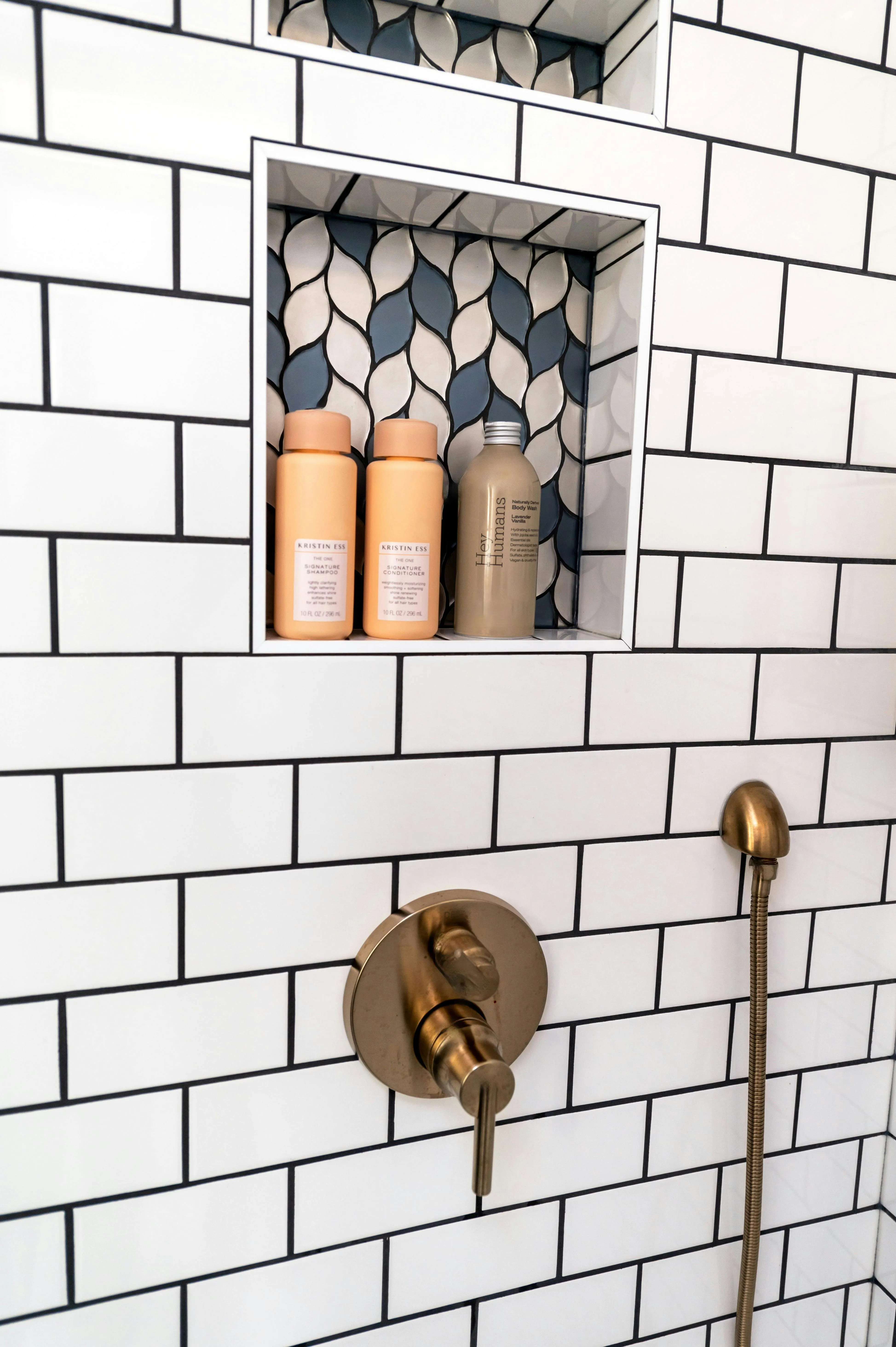
One of the most common reasons small bathrooms feel cluttered and cramped is insufficient storage - products, towels, and toiletries end up on countertops and ledges because there is nowhere else for them to go. The visual noise of clutter makes a small space feel even smaller.
Recessed wall niches in the shower, medicine cabinets that sit flush with the wall rather than protruding from it, and tall narrow linen towers that use vertical height rather than floor footprint are all practical solutions that add storage without adding visual bulk. In older Surrey homes where the walls are being opened for a renovation anyway, having your contractor add recessed niche space during the rough-in phase is one of the most cost-effective storage upgrades available. For more storage ideas specific to smaller bathrooms, what are the best storage solutions for small bathrooms covers the options in full.
Consider Borrowing Space
In Surrey and White Rock's detached home market, many main bathrooms and ensuites in homes built in the 1980s and 1990s were deliberately kept small to maximize bedroom square footage. If the wall adjacent to your bathroom backs onto a closet, a hallway, or a less-used room, borrowing 12 to 18 inches of that space during a renovation can transform the bathroom from tight to genuinely comfortable.
This requires a building permit in both Surrey and White Rock for any wall removal or modification, and needs to be planned carefully to avoid impacting structural elements or mechanical systems. But in terms of return on investment for how dramatically it changes the liveability of the bathroom, it is often one of the best decisions a Surrey homeowner can make. The additional cost is typically modest relative to the overall renovation budget, particularly if walls are already being opened for waterproofing or plumbing work.
Final Thoughts
Making a small bathroom feel bigger in Surrey and White Rock is not about tricks or illusions - it is about making deliberate design choices that give the eye more room to travel. Large format light tiles, a floating vanity, frameless glass, smart lighting, and strategic storage all work together to transform a compact space into one that feels intentional and spacious. If the budget allows, borrowing a small amount of adjacent space can be the most transformative step of all. The most important thing is to approach it as a system - every element working in the same direction - rather than a series of isolated decisions.


