Bathroom Vanity Types: Which Is Best in Surrey BC?
Choosing a bathroom vanity in Surrey or White Rock? Compare freestanding, floating, and built-in vanities on storage, installation, cost, and design fit.

Which Bathroom Vanity Is Right for Your Surrey or White Rock Home?
The vanity is the most used fixture in any bathroom. It anchors the design, determines how much storage you have, and shapes how the space feels every time you walk in. Yet in a lot of Surrey and White Rock bathroom renovations, vanity selection gets rushed - often because it comes near the end of the decision-making process when homeowners have already spent significant time on tile, fixtures, and waterproofing. Before finalizing your vanity choice, it is worth reviewing bathroom standard measurements in Surrey and White Rock to make sure your preferred vanity size fits the space correctly.
Taking the time to understand the three main vanity types - freestanding, floating, and built-in - and how each one performs in your specific bathroom will make a meaningful difference in how happy you are with the finished result. Here is what you need to know.
Freestanding Vanity
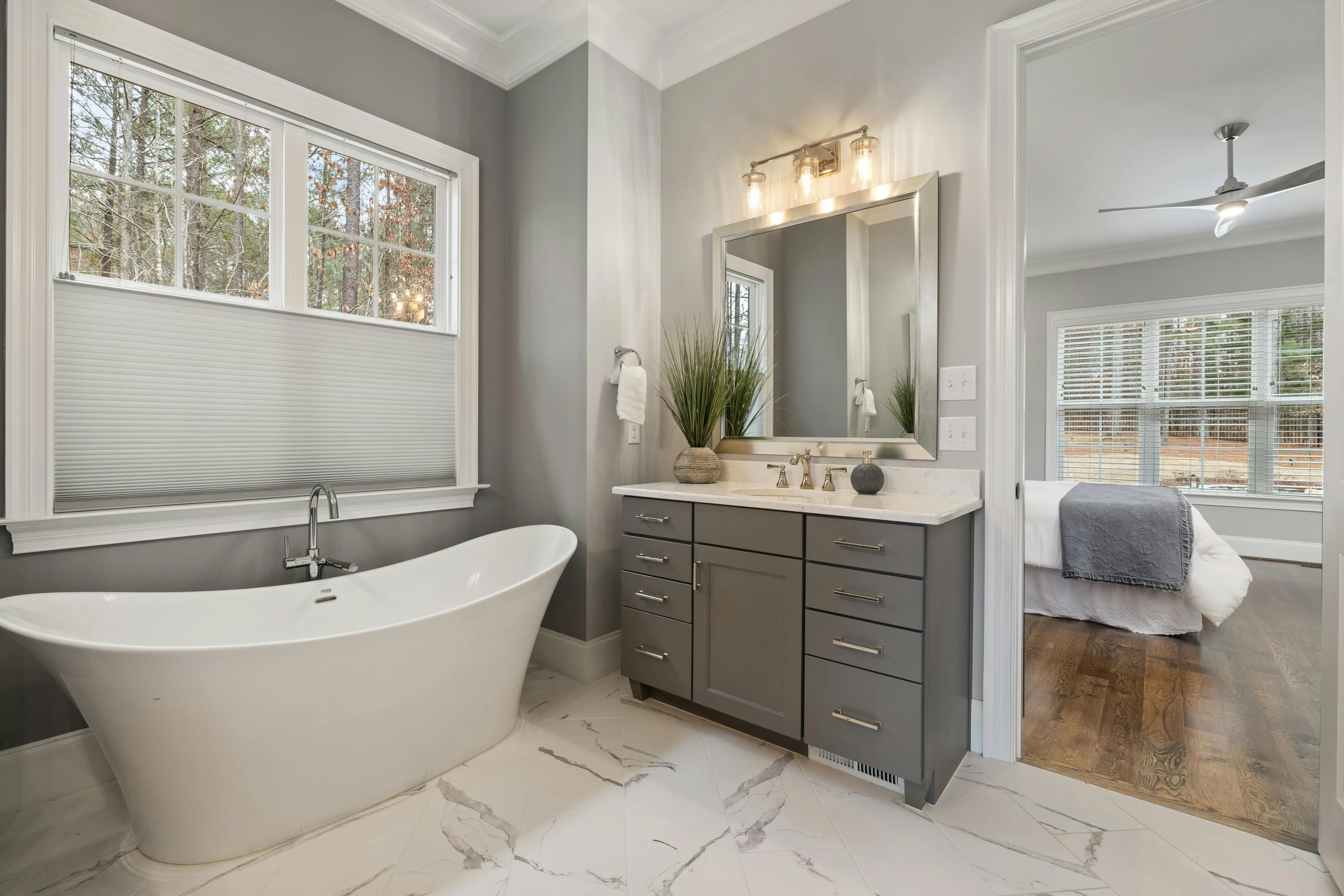
A freestanding vanity is the traditional choice - a cabinet that sits on the floor, resting on legs or a base, and is positioned against the wall without being attached to it structurally. It functions much like a piece of furniture in the bathroom, and the best freestanding vanities in 2026 are designed to look exactly like that: elegant, warm, and considered.
In the Surrey and White Rock renovation market, freestanding vanities are popular in traditional and transitional bathroom designs. They work particularly well in the older 1980s and 1990s detached homes throughout the area, where the bathroom layouts tend to be more generous, and the overall design language of the home leans toward warm and classic finishes.
The main advantage of a freestanding vanity is storage capacity. Because the cabinet box runs to the floor and can be built with generous depth, freestanding vanities typically offer more internal storage volume than floating alternatives of the same width. The installation is also more straightforward - the cabinet does not require wall reinforcement, and it can accommodate older or uneven plumbing without extensive modification.
The trade-off is cleaning. The space between the base of the cabinet and the floor is difficult to clean, and in BC's humid bathroom environment, that gap can collect moisture, dust, and debris. Freestanding vanities with solid bases that sit flush to the floor eliminate this issue but sacrifice the open, airy look that comes from leg-style designs.
Floating Vanity
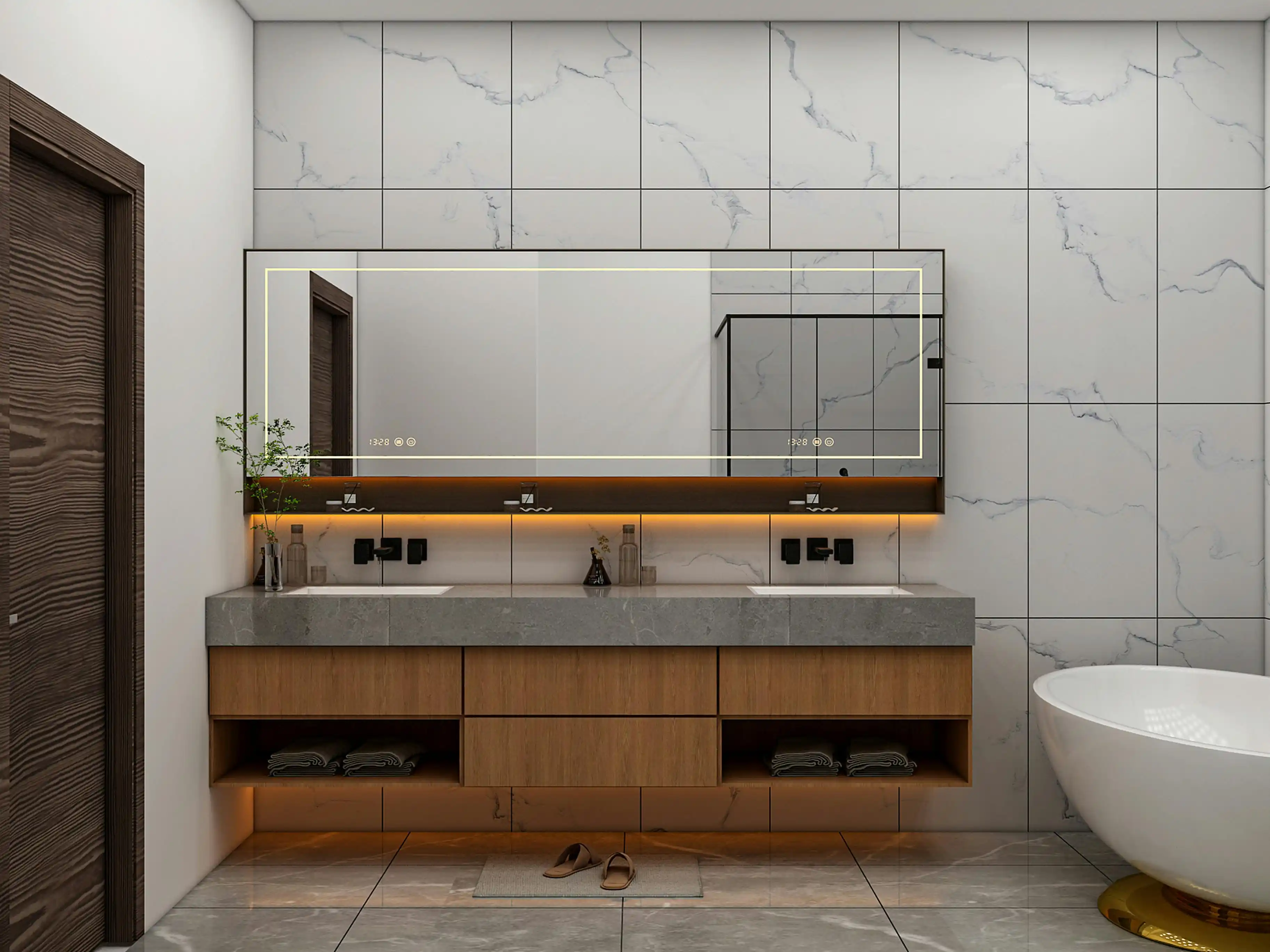
A floating or wall-mounted vanity is attached directly to the wall with no floor contact. It is the dominant choice in modern and contemporary bathroom renovations across Surrey and White Rock in 2026, and it is not hard to understand why. The open floor space beneath the vanity makes a bathroom feel measurably larger; floor cleaning becomes straightforward, and the overall aesthetic is clean, spa-like, and current.
Floating vanities are particularly effective in smaller bathrooms - the kind common in townhouses and condos throughout South Surrey and White Rock - where the visual expansion of seeing the floor beneath the vanity can make a compact space feel significantly more open. Research consistently shows that floating vanities make small bathrooms appear 15 to 30% larger visually, which is a meaningful impact in a space where every perception of size matters.
The installation requirements are more involved than a freestanding cabinet. A floating vanity must be anchored into wall framing or solid blocking behind the drywall, and the blocking needs to be installed correctly to support the weight of the cabinet, stone countertop, and daily use. In a full bathroom renovation - where drywall is already being opened for waterproofing, plumbing, or other work - adding vanity blocking to the scope is relatively simple. In a cosmetic renovation where walls are not being touched, it adds a step that requires an experienced carpenter.
The height of a floating vanity is fully adjustable, which is particularly useful for households with tall individuals or for master ensuites where custom ergonomics make daily use more comfortable. Standard counter height sits around 32 inches from the finished floor, but floating vanities can be set anywhere the homeowner prefers.
One honest limitation is storage. Because the cabinet must remain light enough for secure wall mounting, floating vanities are typically less deep and offer less enclosed storage volume than freestanding alternatives. For a primary bathroom in a Surrey family home where bathroom storage is a genuine daily need, this is worth factoring in. Our guide on the best storage solutions for small bathrooms covers complementary storage ideas that pair well with a floating vanity.
Built-In Vanity
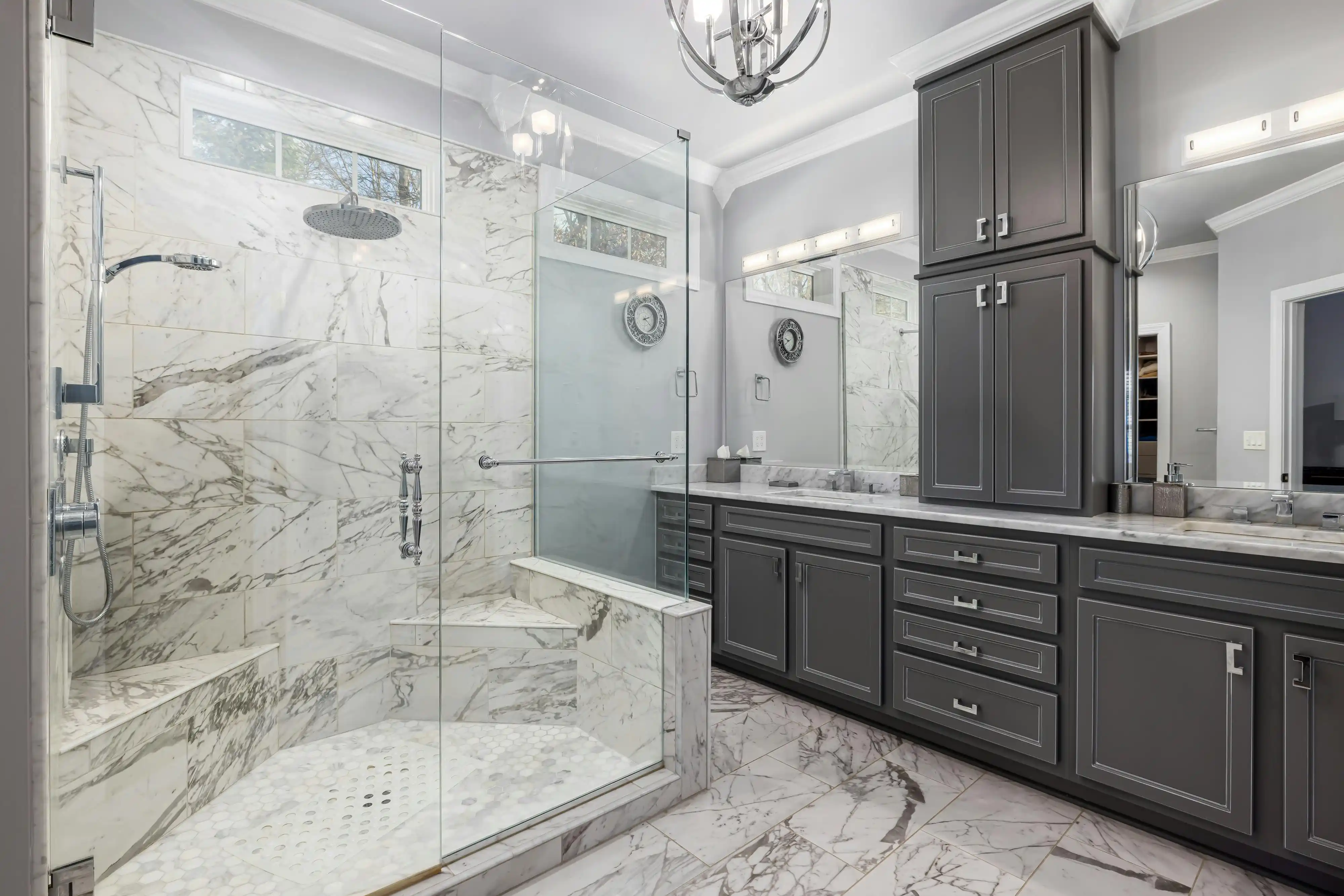
A built-in vanity is custom-designed and integrated directly into the bathroom structure. It looks like part of the room - flush with the walls, often spanning the full width of the vanity wall, with no visible gaps or spaces between the cabinet and its surroundings. Built-in vanities are commonly specified in higher-end master ensuite renovations in South Surrey and White Rock, where homeowners want a seamless, custom result.
The advantage of a built-in is cohesion. Because it is fabricated specifically for the space, it can incorporate features that off-the-shelf freestanding or floating vanities cannot - such as integrated linen storage, electrical outlets recessed into the cabinetry, or a design that flows seamlessly into adjacent millwork like a built-in mirror surround or side storage tower.
Built-in vanities are the most expensive of the three options and require the most lead time, as they are typically custom fabricated by a cabinetry shop and installed by a carpenter. They also require the most precise site preparation - walls need to be perfectly plumbed and square for a built-in to look as intended.
Which One Is Right for Your Surrey or White Rock Bathroom?
The right choice depends on your bathroom size, design direction, household needs, and budget.
A floating vanity is the strongest choice for a modern bathroom refresh in a smaller space, or for any renovation where maximizing the sense of space is a priority. It is also the best choice if your renovation is part of a full bathroom gut where wall blocking can be easily added to the scope. For master ensuites in South Surrey and White Rock where a contemporary aesthetic is the goal, floating is the go-to recommendation of most experienced renovation contractors in the area.
A freestanding vanity is the better choice for a traditional or transitional design, for homeowners who need maximum storage, or for cosmetic renovations where opening walls is not part of the scope. It is also typically more budget-friendly for the same quality of cabinet.
A built-in vanity makes the most sense for larger master ensuite projects where budget allows for custom millwork, and where the homeowner wants a result that feels fully integrated and tailored to the space.
Final Thoughts
Vanity selection is one of those decisions that looks simple from a distance and becomes more nuanced the closer you get to it. Understanding the practical differences between freestanding, floating, and built-in options - not just how they look in photos but how they install, how they perform, and how they hold up in BC's humid bathroom environment - puts you in a much better position to choose the one that works for your home and your household. For a full picture of bathroom renovation budgets in Surrey and White Rock, the guide to budgeting for a bathroom renovation breaks down where costs typically land.


