Which Shower Glass to Choose: Surrey & White Rock Guide
Choosing shower glass for your Surrey, White Rock or Langley bathroom? We compare frameless, semi-frameless, and framed options with honest 2026 costs and advice.
Which Shower Glass Should You Choose for Your Surrey, White Rock or Langley Bathroom?
⏱ Estimated Reading Time: 7–8 minutes
The shower glass decision gets made late in most bathroom renovations - after the tile is chosen, the vanity is ordered, and the budget has already taken shape. And yet it's one of the decisions that most dramatically affects how the finished bathroom looks and feels. The same tile and fixtures can produce a completely different result depending on whether the glass enclosure is frameless, semi-frameless, or framed.
Here's the honest comparison Surrey, White Rock and Langley homeowners need before making this decision - including what each type actually involves, what they cost in our market, and which one makes sense for different bathrooms and budgets.
First - All Shower Glass Must Be Tempered Safety Glass
Before comparing types, one important baseline: in BC, all glass used in shower enclosures must be tempered safety glass. Tempered glass is four to five times stronger than standard glass and, critically, when it breaks it shatters into small, relatively harmless rounded fragments rather than large dangerous shards. This is not optional - it's a BC Building Code requirement that applies to all bathroom shower glass installations. Your glass installer or contractor should be specifying tempered glass as standard. If they don't mention it, ask.
Framed Shower Enclosures - The Budget Option
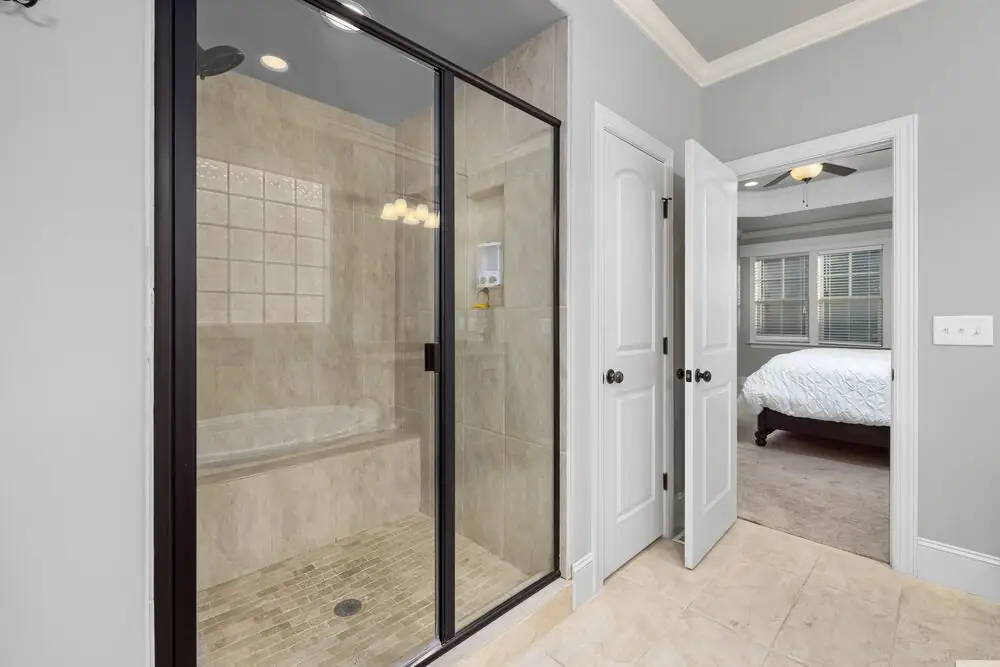
A framed shower enclosure uses continuous aluminium channels on all four sides of the glass panels - top, bottom, and both verticals - to hold the glass in place. The frame provides the structural support, which means the glass itself can be thinner (typically 4mm to 6mm) and therefore less expensive.
Framed enclosures are the most affordable option and have been the standard in residential bathroom construction for decades. They're widely available, install relatively quickly, and come in a range of aluminium finish options - chrome, brushed nickel, matte black, and bronze - that can be matched to other bathroom hardware.
The honest trade-off: The continuous aluminium framing around every panel creates a surface that collects soap scum, hard water deposits, and mould in the corners and channels. In BC's humid climate, keeping the channels clean requires regular attention. Many homeowners find that the cleaning requirement becomes the most frustrating aspect of a framed enclosure over time - the frame itself is clean, but the channels between the frame and the glass are not.
Cost in Surrey, White Rock and Langley: A standard framed shower enclosure for a 60-inch alcove typically runs $1,280 to $2,560 CAD installed, depending on the configuration and hardware finish.
Best for: Secondary bathrooms and basement bathrooms where budget is the primary consideration, or where the design direction is traditional and framed hardware fits naturally.
Semi-Frameless Shower Enclosures - The Middle Ground
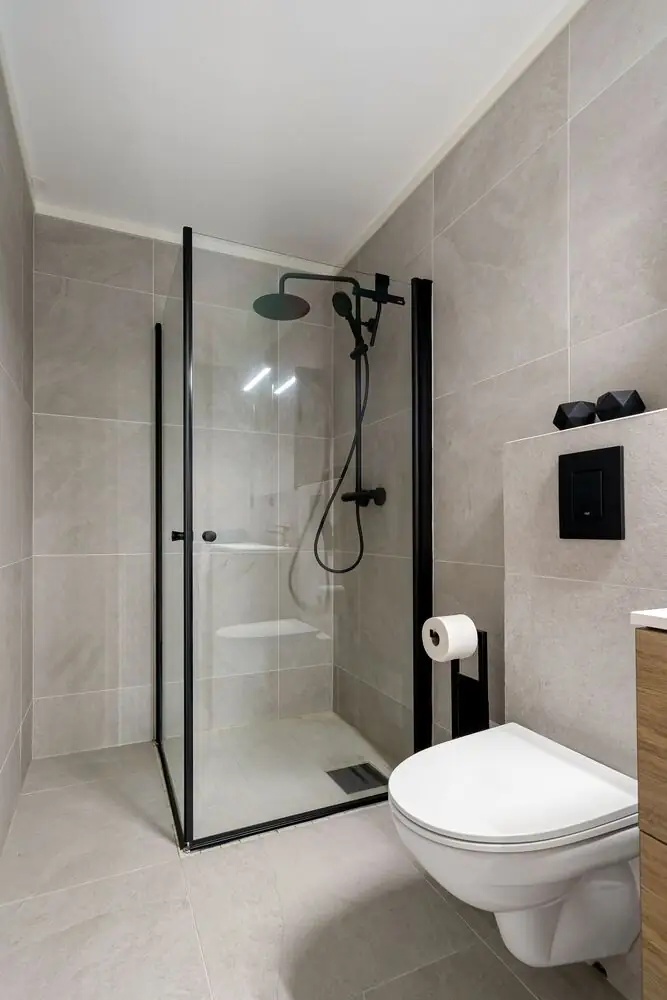
A semi-frameless enclosure is a hybrid - it has framing on some elements (typically the outer perimeter or fixed panels) but the door itself swings without a frame. The result is a cleaner look than fully framed, less expensive than fully frameless, and a maintenance profile that falls between the two.
The most common semi-frameless configuration is framed fixed panels with a frameless pivot or sliding door. This gives the door the clean edge that reads as frameless at first glance while the structural support comes from the fixed panel frames. It's a reasonable compromise that a lot of mid-range bathroom renovations in Surrey and Langley use when the budget doesn't quite support fully frameless but the framed look isn't desirable.
The honest trade-off: Semi-frameless still has some aluminium framing - typically the outer perimeter - that requires the same cleaning attention as a fully framed enclosure. The aesthetic improvement over fully framed is real but more modest than the jump from semi-frameless to fully frameless.
Cost in Surrey, White Rock and Langley: Semi-frameless enclosures typically run $1,920 to $3,840 CAD installed for a standard alcove configuration.
Best for: Main bathrooms in mid-range renovations where some budget improvement over framed is desirable without the full commitment to frameless pricing. Also works well in traditional and transitional design directions where some hardware framing suits the overall aesthetic.
Frameless Shower Enclosures - The Premium Standard
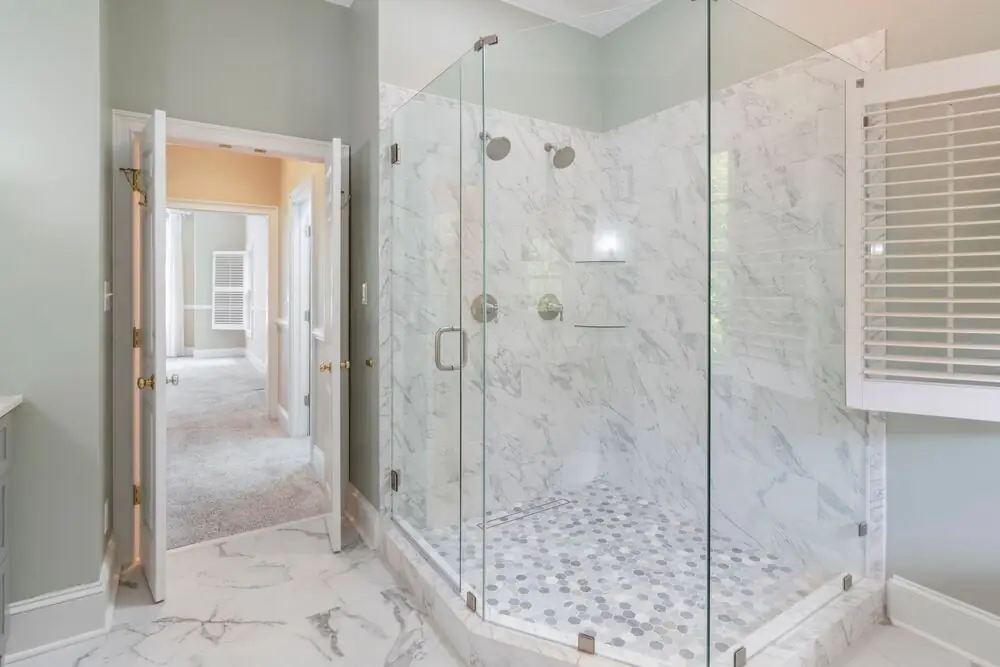
A frameless shower enclosure uses no continuous perimeter framing. The glass is thick enough to be structurally self-supporting - typically 8mm, 10mm, or 12mm tempered glass - and is held in place by hardware: hinges, clamps, U-channels at specific points, and minimal header bars rather than continuous aluminium framing. The result is a clean, open appearance where the tile work inside the shower is fully visible and the enclosure adds minimal visual weight to the bathroom.
Frameless is the dominant specification in mid-range and premium bathroom renovations across Surrey, White Rock and Langley in 2026. The reasons are both aesthetic and practical. Aesthetically, frameless glass makes bathrooms feel larger - the eye reads through the glass to the full depth of the shower, and without the visual weight of framing, the shower and bathroom read as one connected space. Practically, there are no channels or frames to trap soap scum and mould - cleaning is a wipe of the glass surface and the minimal hardware.
Glass thickness matters: 8mm is the standard minimum for frameless enclosures. 10mm is the specification used by most quality installers in the Lower Mainland. 12mm is premium - noticeably heavier, more solid-feeling, and used in high-end installations. The difference you feel when you swing a 10mm or 12mm frameless door compared to a framed door with thin glass is significant - it communicates quality in a way that's immediately obvious.
Hardware finish: Frameless hardware comes in the same finish families as other bathroom hardware - brushed nickel, matte black, brushed brass, and chrome. Matching the hardware finish to your tapware and other bathroom fixtures creates cohesion. In 2026, brushed nickel and matte black are the dominant choices in Surrey, White Rock and Langley bathrooms. Chrome is fading as a primary finish choice.
The honest trade-off: Frameless enclosures allow slightly more water escape at the edges than framed - there's no continuous rubber seal against the wall on all four sides. This is acceptable in a properly waterproofed shower with good drainage and ventilation, but it means the bathroom floor immediately outside the shower may receive some occasional water contact. Good bathroom exhaust ventilation and non-slip tile on the bathroom floor are appropriate companions to a frameless enclosure.
Cost in Surrey, White Rock and Langley: Frameless enclosures for a standard 60-inch alcove typically run $2,560 to $5,120 CAD installed. Custom configurations - corner showers, walk-in designs with multiple fixed panels, or oversized openings - run higher depending on the linear footage of glass and number of hardware points.
Best for: Any bathroom renovation at the mid-range and above. Master ensuites where the design investment is significant and the glass needs to match the overall quality level. Walk-in and curbless shower designs where the openness of frameless glass amplifies the spa-like effect.
Glass Options Within Each Category
Beyond the frame type, there are glass treatment choices that affect both aesthetics and maintenance:
Clear glass
The standard. Fully transparent, showcases the tile inside the shower, and cleans easily. The most common choice in Surrey, White Rock and Langley bathroom renovations.
Low-iron glass
Standard clear glass has a slight green tint from iron content in the glass composition. Low-iron glass (sometimes called ultra-clear or starphire glass) eliminates this tint, producing a completely neutral, water-clear appearance. The difference is noticeable when you compare the two side by side, particularly in frameless applications where the glass edge is visible. Low-iron glass adds approximately $160 to $320 CAD to the enclosure cost and is worth considering for premium ensuite renovations.
Frosted or privacy glass
Available in varying levels of opacity, from lightly etched to fully frosted. Used when the shower is visible from the bedroom in an open ensuite layout, or simply for privacy preference. Frosted glass is harder to keep clean than clear glass - the texture traps soap residue and hard water deposits. If privacy is needed, a frosted lower section with clear upper panels is a practical compromise.
Rain or patterned glass
Textured glass with patterns that obscure the interior while remaining partially translucent. These can look striking in the right design direction but are significantly harder to keep clean than clear glass - not recommended for anyone who values low-maintenance cleaning.
What to Ask Your Glass Installer
Before committing to a specific glass type and configuration, confirm:
The glass thickness being specified - 10mm minimum for frameless. The tempered glass certification - it should comply with BC Building Code requirements. The silicone sealant type being used - 100% silicone (not acrylic or latex) is the appropriate specification for a wet shower environment. Lead time from measurement to installation - typically two to three weeks for custom glass, which needs to be factored into the renovation timeline. Whether the installer will coordinate the measurement visit after tile installation is complete - glass should always be measured from the finished tile surface, not from drawings.
For the full guide to walk-in shower design including how glass enclosure choices interact with the overall shower layout, walk-in shower ideas for Surrey, White Rock and Langley homes in 2026 covers the complete picture.
Final Thoughts
For most bathroom renovations in Surrey, White Rock and Langley at the mid-range and above, frameless 10mm glass is the right specification. It looks better, cleans more easily, and communicates the quality level of the surrounding renovation in a way that semi-frameless and framed simply don't. For secondary bathrooms and basement bathrooms where budget is the primary driver, semi-frameless provides a meaningful aesthetic step up from fully framed at a more accessible cost. Fully framed remains appropriate for budget renovations where the enclosure is functional and the investment is going elsewhere.


