Best Basement Flooring: Surrey, White Rock, Langley
Choosing basement flooring in a damp climate? Compare vinyl plank, tile, engineered wood and carpet for Surrey, White Rock and Langley basement renovations.
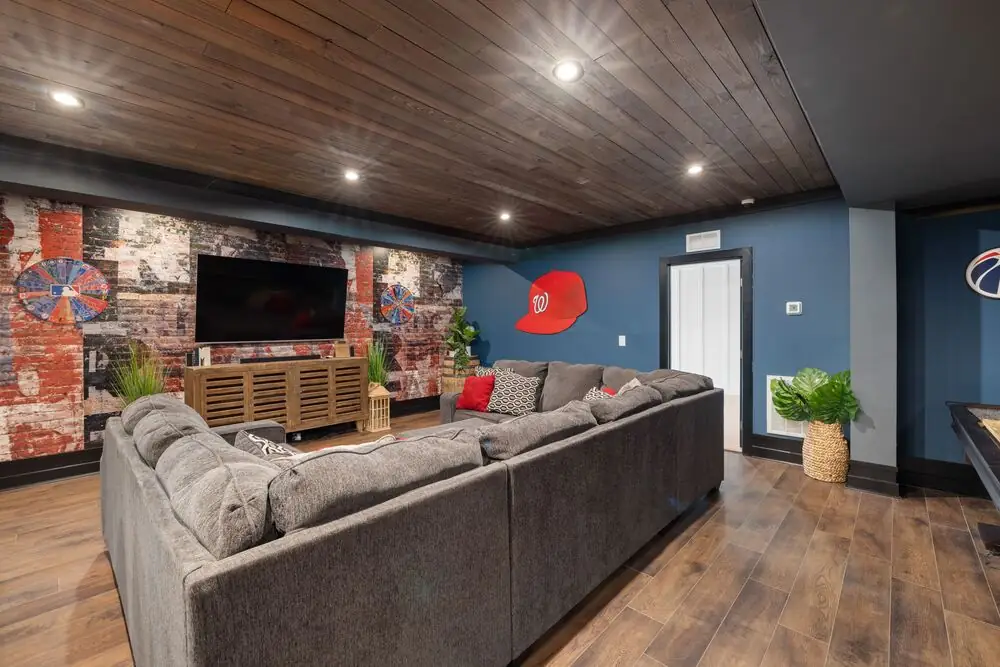
Best Basement Flooring for Surrey, White Rock and Langley Homes
⏱ Estimated Reading Time: 5–6 minutes
Flooring a basement isn't the same as flooring the rest of the house. Basement floors sit on a concrete slab that's in direct contact with the ground, which makes them cooler and more exposed to moisture than any other floor in the home. In the Lower Mainland's long wet season, that moisture is a constant factor. The right basement flooring handles it gracefully and stays comfortable underfoot for years, while the wrong choice can warp, swell, or trap moisture against the slab. Here's how the main options compare for basements in Surrey, White Rock and Langley.
Deal With Moisture First
No flooring can fix a wet basement. Before choosing a floor, make sure the basement is dry. Look for staining, efflorescence (the white, powdery deposits on concrete), musty smells, or damp spots after heavy rain. A simple test is to tape a square of plastic sheeting tightly to the bare slab for a day or two. If moisture collects underneath, vapour is coming up through the concrete, and the flooring choice needs to account for it. If water is actively getting in, address the source, whether it's drainage, grading, or a foundation crack, before any finishes go down. Our guide to preventing water damage in the wet season covers the common causes and fixes.
Luxury Vinyl Plank
Luxury vinyl plank, often called LVP, is the most popular basement flooring today, and for good reason. Most products have a waterproof core, so occasional moisture or a spill won't damage them. They look convincingly like wood or stone, they're comfortable and warmer underfoot than tile, and they're durable enough for kids, pets, and home gyms. Rigid-core versions handle minor unevenness in a concrete slab better than flexible vinyl. LVP is usually installed as a floating floor over an underlay, which makes it relatively quick to install and easy to repair. For most basements, it's the safest all-around choice.
Porcelain Tile
Porcelain tile is completely unaffected by moisture, extremely durable, and suits basement bathrooms, laundry rooms, mudroom entries, and wet bars. Its downside in a basement is that it's hard and cold underfoot, since it takes on the temperature of the slab below. Adding in-floor heating solves that and makes tile one of the most comfortable basement floors there is, though it adds cost. Large-format tiles reduce grout lines and give a cleaner look across a bigger space.
Engineered Hardwood
Solid hardwood is generally a poor fit for basements, since it expands, cups, and shrinks with changes in moisture. Engineered hardwood, which has a real wood surface over a stable layered core, handles basement conditions far better and gives you the warmth and look of real wood. It still needs a dry basement and a proper moisture barrier or subfloor beneath it, and it's less forgiving of water than vinyl or tile. If you want genuine wood in a dry, well-conditioned basement, engineered is the way to get it.
Carpet and Carpet Tiles
Carpet makes a basement warm, quiet, and comfortable, which is why it's still a common choice for media rooms, playrooms, and bedrooms. The risk is that wall-to-wall carpet and pad can trap moisture against the slab and harbour mould if the basement ever gets damp. Carpet works best in basements that are reliably dry and have a good subfloor beneath. Carpet tiles are a smart middle ground, since individual tiles can be lifted, dried, or replaced if a problem occurs, rather than tearing out a whole room.
Laminate and Polished Concrete
Traditional laminate has a fibreboard core that swells permanently if it gets wet, which makes it a risky choice below grade. Some newer laminates are marketed as water-resistant, but in a basement, vinyl plank is usually the more forgiving option. At the other end of the spectrum, polished or sealed concrete uses the slab itself as the finished floor. It's durable and suits a modern or industrial look, workshops, and gyms, but it's hard and cold, and it reveals every crack and imperfection in the slab.
Consider a Subfloor System
A subfloor system adds a layer between the concrete and the finished flooring, often a dimpled membrane panel that creates a small air gap above the slab. It provides a thermal break that makes the floor noticeably warmer, lets moisture vapour dissipate rather than being trapped, and gives a flatter base for the finished floor. The trade-off is a small loss of ceiling height, which matters in basements that are already close to the minimum. Your contractor can tell you whether your basement has the height to spare. For more on installation methods, our guide to floating vs glue-down flooring explains how each approach works.
Matching Flooring to How You'll Use the Space
The best floor depends on what the basement is for. A basement suite needs durable, easy-to-clean flooring that holds up to tenant turnover, and LVP is usually the right fit. A home gym benefits from rubber flooring over a durable base. A media room or kids' playroom suits carpet tiles or LVP with a comfortable underlay. Bathrooms and laundry areas call for tile or vinyl. Many basements combine two or three of these in different zones. For more ways to use the space, our guide to basement renovation ideas covers the options.
Final Thoughts
The best basement flooring for a Surrey, White Rock or Langley home is one that respects the concrete slab and the moisture that comes with it. Start by making sure the basement is dry, then choose a floor that suits both the conditions and how you'll use the space. Luxury vinyl plank is the safest all-around choice, porcelain tile is ideal for wet areas, engineered hardwood works in a dry basement, and carpet tiles bring warmth where it's wanted. Add a subfloor system if you have the height, and the floor will stay warm, dry, and good-looking for years.


