Updating a 1990s Condo: Surrey & White Rock Guide
Renovating a 1990s condo in Surrey or White Rock? Check for Poly-B, popcorn ceilings and envelope history, then update the finishes that date the unit.
Updating a 1990s Condo in Surrey and White Rock: What to Know First
⏱ Estimated Reading Time: 5–6 minutes
Quick answer: Before updating a 1990s condo, check three things that are common in buildings from that era: Poly-B plumbing, popcorn ceilings that may contain asbestos, and the building’s envelope repair history. Once those are understood, the updates that make the biggest difference are replacing carpet with hard flooring, modernizing the kitchen and bathrooms, opening up closed-in layouts, and upgrading lighting and ventilation.
At a glance:
- Check first: Poly-B plumbing, popcorn ceilings, envelope and depreciation report
- Biggest visual change: flooring, kitchen, bathrooms, lighting
- Common layout fix: opening a closed kitchen where the structure allows
- Often overlooked: bathroom fans, electrical capacity, the fireplace surround
A large share of the condos in Surrey and White Rock were built in the late 1980s and 1990s. They’re often well located, with good layouts and generous square footage compared with newer units, but they also share a set of features and hidden issues that date them. Oak or almond cabinets, laminate counters, wall-to-wall carpet, textured ceilings, and closed-in kitchens are all typical. So are a few things you can’t see. Here’s what to know before updating a condo from this era.
Know What Kind of Building You’re In
Many 1990s condos in our area are wood-frame low-rises, while others are concrete towers, and the building type shapes what you can change. Wood-frame buildings offer more flexibility for wiring, lighting, and sometimes plumbing, but bring sound and fire-separation considerations. Concrete towers have fixed drains and solid ceilings. Our guides to renovating a low-rise wood-frame condo and renovating a concrete highrise condo explain the differences.
Check the Envelope History
Many wood-frame buildings from this period were affected by BC’s leaky condo problem, and a lot of them have since had their exterior envelopes rebuilt. Before planning a renovation, find out whether your building has been remediated, review the depreciation report, and check recent strata minutes for upcoming work. If the building is due for window replacement or envelope repairs, it may affect the timing of your project, and there’s no point upgrading something the strata is about to replace.
Poly-B Plumbing
Poly-B plumbing was widely used in homes and condos built from the mid-1980s to the mid-1990s, and it has a reputation for failing without warning. In a condo, a burst pipe can damage the units below as well as your own. Some stratas have replaced Poly-B building-wide, while in others it’s up to individual owners. Find out what’s in your unit before you finish new walls and ceilings, since replacing it during a renovation is far easier than afterward. Our guide to Poly-B pipe explains how to identify it and what to do.
Popcorn Ceilings and Asbestos
Textured popcorn ceilings were common in this era, and they date a unit immediately. Some older ceiling textures and drywall compounds contain asbestos, so the material should be tested before it’s scraped, sanded, or removed, as WorkSafeBC requires before disturbing materials in older buildings. Once testing confirms what’s there, the ceiling can be removed or covered and refinished with a smooth, modern surface that makes the whole unit feel brighter.
Replace the Carpet
Wall-to-wall carpet is one of the clearest signs of a 1990s condo. Replacing it with engineered hardwood, laminate, or luxury vinyl plank modernizes the unit and makes it easier to keep clean. In a condo, check your strata’s flooring rules first, since most require an acoustic underlay that meets a specified sound rating to protect the unit below.
Modernize the Kitchen
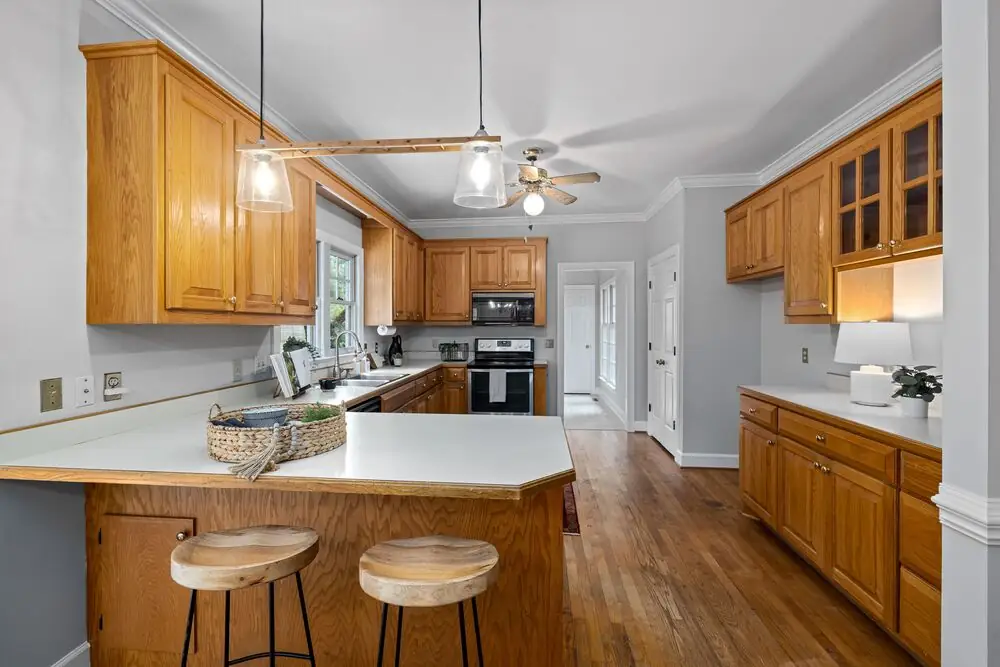
Kitchens from this era are often closed off, with oak or white melamine cabinets, laminate counters, and soffits above the uppers. Opening the kitchen to the living area, where the structure allows and the strata approves, transforms how the unit feels. New cabinets that run to the ceiling, quartz counters, a modern backsplash, and updated lighting complete the change. If the cabinet boxes are solid, refacing or refinishing can deliver a fresh look for less.
Update the Bathrooms
Bathrooms in 1990s condos often have almond or cultured-marble fixtures, small mirrors, and weak exhaust fans. Replacing vanities, toilets, and tub surrounds, and converting a rarely used tub to a walk-in shower where the drain allows, makes a big difference. A properly sized exhaust fan that vents outside is one of the most worthwhile upgrades, since bathroom moisture is a common cause of mould. Our guide to the best bathroom exhaust fan covers how to choose one.
Lighting, Electrical, and the Fireplace
Many units from this period have few overhead lights, dated fixtures, and limited electrical capacity. Adding new lighting and outlets is a good time to have the panel checked, especially if you’re adding appliances. Many 1990s condos also have a gas fireplace with a dated tile or brass surround, and updating the surround with modern tile, stone, or a simple painted mantel can refresh the living room without touching the fireplace itself.
Plan for Strata Approval and Budget
Like any condo renovation, updating a 1990s unit needs strata approval for anything beyond cosmetic work, and the building’s rules on work hours, elevators, and contractors all apply. Our guides to condo renovation cost and the condo renovation timeline cover what to expect.
Final Thoughts
A 1990s condo in Surrey or White Rock often has great bones hidden behind dated finishes. Start by understanding the building, its envelope history, and whether the unit has Poly-B plumbing or ceilings that need testing. Then focus on the updates that make the biggest difference: flooring, kitchen, bathrooms, lighting, and ventilation. With strata approval and a contractor who knows buildings from this era, an older condo can feel as fresh as a new one.


